Search This Blog

Wednesday, July 29, 2020

Beyond the Pale, Part 1


SPENSER, PASTORAL AND IRELAND 1

I.


And if I waste, who will bewail my heavy chaunce?
And if I starve, who will record my cursed end?
And if I dye, who will saye:  This was Immerito?

                --Spenser to Gabriel Harvey, 1579


Edmund Spenser


With a great deal on his mind, Edmund Spenser arrived in London late in 1595 from his adopted homeland, Ireland.  If he carried with him high hopes of preferment, of patronage and influence, riding upon publication of the great quantity of verse he had composed, Spenser nonetheless must have crossed the Irish Sea in great perplexity of spirit over the recent course of events in the Irish countryside and the English court.  His misgivings, obliquely set forth throughout most of his verse, were most clearly expressed in A View of the Present State of Ireland, which he either wrote or revised in England in 1596.  But Spenser would not live to see his words in print, much less see them enacted into royal policy.  A View was not registered with the Stationer's Company until April 13, 1598, for publication by Matthew Lownes, and even then, only "upon condicion that hee gett further aucthoritie before yt be prynted."  Finally published in 1633 at Dublin by Sir James Ware, A View stands as the final word in Spenser's canon, yet it remains somewhat an orphan in modern scholarship, rarely invoked for the light it sheds on Spenser's more celebrated texts.


It is a critical commonplace that the fifth book of The Faerie Queene, among the other
manuscripts crossing the Irish Sea  with Spenser in 1595, was written to honor the Irish campaigns of Arthur, Lord Grey de Wilton, and to shield his reputation against detractors at Queen Elizabeth's court; portions of the sixth book of Spenser's epic were also highly evocative of the author's experience in Ireland and at court.  Such matters could be stated allegorically in The Faerie Queene but were too dangerous for publication in prose for nearly forty years.  This fact not only calls attention to the Queen's tightening censorship upon historical works in the late 1590s, 2 but also highlights the emerging distinction between "literary" and "nonliterary" works and the operative rhetorical constraints within each category.

Eschewing nearly all the rhetorical dodges and obfuscations common in his literary productions, A View was a relatively straightforward exposition of the early stages of the native Irish rebellion against a corrupt English colonial administration and an unambiguous statement of Spenser's social and political views.  If the "state of this misery and lamentable image of things" were to be "told and feelingly presented to her sacred Majesty, being by nature full of mercy and clemency," Spenser hoped, she would stop "the stream of such violences" and punish "the authors and counsellors of such bloody platforms." 3

The issue of Spenser's "authority," his political relationship to Elizabethan England's machinery of ideological repression, is here posed most sharply, but it had been problematic to his career ever since he assumed in his youth the vocation of author.  The Shepheards Calender in 1579 had assumed an entire gamut of authorizing strategies, beginning with Spenser's verse prologue addressed to his noble patron, Sir Philip Sidney:  "And if that envie barke at thee, / As sure it will, for succoure flee/ Under the shadow of his wing," Spenser advises his book.  "And when thou art past jeopardee, / Come tell me what was sayd of me: / And I will send more after thee."  The specter of envy and the perception of his own vulnerability evidently haunted Spenser, for his trepidations concerning the poem's reception were expressed in his October, 1579, correspondence with Gabriel Harvey, whose own signature had countenanced Spenser's anonymous debut as Immerito, "our new Poete."  Already, however fortunate he was to enjoy the patronage of Leicester and Sidney, there is a sense of doomed aspiration in Spenser's ill-concealed disappointment at his audience with the Queen, apparently deferred:  "Your desire to heare of my late being with hir Majestie must dye in it selfe."  From the very outset of his career the new poet felt the venom of courtier cliques.

Gabriel Harvey


The same letter, interestingly, contains a very circumspect plea to Harvey that he reply "ere I goe, which will be (I hope, I feare, I thinke) the next weeke, if I can be dispatched of my Lorde."  It seems reasonable to suppose that Spenser was at this time resigning himself to a career in Ireland, although almost a year would pass before he left England.  Another letter to Harvey, dated April, 1580, from Westminster, refers evidently to the same travel plans, now postponed indefinitely:  that olde greate matter still depending."  Difficult as it is to define the origin or the circumstances of Spenser's decision to seek his fortune at the outposts of English civilization, they can probably be ascribed to his loyalty to the court factions Leicester-Sidney, whose extensive holdings in Ireland and influence upon the Queen's government had precipitated a military crisis that would dominate English politics in the late decades of the sixteenth century.

The young Spenser may have travelled to Ireland for a few months in Leicester's entourage as early as 1577 to witness the quelling of Desmond's Rebellion by the forces under Sir Philip Sidney.  Though scholars remain in doubt concerning Spenser's actual presence, A View describes the execution of Murrogh O'Brien at Limerick in July, 1577, through the persona of an eyewitness:

 I saw an old woman, which was his foster-mother, take up his head whilst he was quartered and  suck up all the blood that ran thereout, saying that the earth was not worthy to drink it, and  therewith also steeped her face and breast and tore her hair, crying out and shrieking most terribly. 4

If this brief tour of Ireland did indeed occupy Spenser during the year between his commencement as M.A. from Cambridge in 1576 and his employment by John Young, bishop of Rochester in 1578, its future significance loomed large.  The following year, which saw the publication of The Shepheardes Calender and the first drafts of The Faerie Queene, constituted a key moment in Spenser's career as a would-be courtier and in the definition of his poetic vocation.  By this time, it is clear that the poet was back in London, in the service of the Earl of Leicester and among the literary acquaintances of Leicester's nephew, Sir Philip Sidney.  What remains unknown is the degree to which Spenser's hopes and visions were tied, even at this early date, to his adventures in the outlands.  His very adoption of the pastoral mode and his creation of the Colin Clout persona-- a "natural" man in a social milieu reduced to essentials-- may well have been influenced by his anticipation of a successful career in Ireland.

Spenser's Irish sojourn began in the relative security of the English Pale, which included the shires of Dublin, Meath, Westmeath, Kildare, and Louth.  As secretary to the new Lord Deputy of Ireland, Lord Grey, Spenser arrived in Ireland in August, 1580.  Though headquartered in Dublin throughout Grey's tenure, he frequently witnessed the devastation visited upon the Irish in campaigns beyond the Pale.  Spenser apparently was present to observe the surrender and wholesale slaughter, by troops commanded by Sir Walter Raleigh, of a papal force of over six hundred men at Smerwick Bay in November, 1580. 5  Nothing scandalized Grey's reputation in London more than the apparent savagery of his treatment of these prisoners, and Spenser's View, sixteen years after the event, is at great pains to defend Grey's conduct.  For years afterward, Grey was dogged by rumors that he had promised mercy in return for surrender, and now, wrote Spenser, "most untruly and maliciously do these evil tongues backbite and slander the sacred ashes of that most just and honourable personage, whose least virtue, of many excellent that abounded in his heroic spirit, they were never able to aspire unto."  This was the very Blatant Beast that had hounded Immerito in 1579 and that would figure so largely in the quest of Artegall in The Faerie Queene.


Arthur, Lord Grey de Wilton

In March, 1581, the year prior to Grey's recall, Spenser acquired clerkship for the faculties in the Dublin chancery, where he took advantage of his office by acquiring leases at modest rents on estates forfeited by Irish rebels.  Among these was the lease to a house known as New Abbey in County Kildare, west of Dublin but still within the Pale, where he resided intermittently in 1583 and 1584.  His interests the following year, however, shifted farther south to the Munster outlander, where he was appointed deputy to Ludovick Bryskett in the clerkship of the council of Munster.  By 1586, Spenser held prebend of Effin in County Limerick and obtained perpetual lease of Kilcolman Castle in County Cork and the 3,028 acres surrounding, a compact block of land lying between the rivers Bregoge and Awbeg and the Ballythoura Hills.  In 1588, resigning his clerkship, he occupied Kilcolman and continued over the years to acquire lands in a venture to settle families of English colonists in the Irish wilderness.

As Stephen Greenblatt observes, "For all Spenser's claims of relation to the noble Spensers of Wormleighton and Althorp, he remains a 'poor boy,' as he is designated in the Merchant Taylor's School and at Cambridge, until Ireland.  It is there that he is transformed from the former denizen of East Smithfield to the 'undertaker'-- the grim pun unintended but profoundly appropriate-- of 3,028 acres of Munster land." 7  Spenser's career, Greenblatt adds, from 1582 on enhanced his social status (putting the "Gent." next to his name) at the expense of the social insecurity of his Irish predecessors, as he acquired "ruined abbeys, friaries expropriated by the crown, plow lands rendered vacant by famine and execution, property forfeited by those whom Spenser's superiors declared traitors."  It therefore comes as no real surprise to find that Spenser "was involved intimately, on an almost daily basis, throughout the island, in the destruction of Hiberno-Norman civilization." 8


II.


Him first from court he to the cities coursed,
And from the cities to the townes him prest,
And from the townes into the countrie forsed,
And from the country back to private farms he scorsed.

From thence into the open fields he fled,
Whereas the heardes were keeping of their neat,
And shepheards singing to their flockes, that fed,
Layes of sweete love and youthes delightfull hetat...

         --The Faerie Queene, VI.ix.3-4


By the end of his first decade as an Irish "planter," Spenser had formed new alliances to advance his cause in the English court, the most significant of which was with Sir Walter Raleigh, at Elizabieth's favor the proprietor of several large estates in Ireland.  With the manuscripts of the first three books of his Faerie Queene and an assortment of Complaints, he accompanied Raleigh to England, his first return since arriving with Lord Grey in 1580, where he was at last introduced to Queen Elizabeth.  Spenser's dedication of Colin Clout's Come Home Againe  to Raleigh offers the new pastoral

 ... in part of paiment of the infinite debt in which I acknowledge my selfe bounden unto you, for your singular favors and sundrie good turnes showed to me at my late being in England, and with your good countenance protect against the malice of evill mouthes, which are alwaies wide open to carpe at and misconstrue my simple meaning.


If the "simple meaning" of Spenser's earlier pastoral was problematical, the model he was about to unveil in Colin Clout's Come Home Againe would reflect the new ambiguities of his present situation.  Spenser's career, here at an important crossroad, probably lost more than it gained under the countenance of Raleigh,  as it had earlier under that of Sidney and as it would again under the ill-fated Essex regime.  Hence Spenser's stay in England in 1589-90 deepened the question of his social standing rather than clarifying it. While gaining the royal audience and assuring his poetic reputation by the publication of some of his most important works, Spenser also succeeded in arousing his enemies at court, particularly Burghley, to close the door upon him.  Spenser returned to Ireland in 1591 with a small annual pension, rather than a hoped-for court sinecure, as the result of many months' machinations in London.


Accordingly, there were drastic changes in Spenser's pastoral mode.  The Colin Clout character, in particular, underwent a transformation.  Rather than reflecting, sometimes ironically, the natural landscape, Colin will now transform nature to glorify Cynthia.  From a more-or-less coequal stature with other pastoral characters (Piers, Cuddy, Hobbinol, etc.) in The Shepheardes Calender, Colin now assumes the role of principal player among a chorus of pupils, rather than peers.  (Indeed, the comic naivety of these characters often renders them childlike, reforming the pastoral community into a family under the fatherhood of Colin Clout, sharply differentiated by virtue of his superior knowledge of the world brought back from Cynthia's court.)  Instead of the non-specific pastoral settings of the Calender, Colin will now inhabit a landscape explicitly Irish and invite identifiable Irish folklore (e.g., the tale of Father Mole) into his narrative.  Perhaps most significant, the encomia to Cynthia and her court take on the tone of satire, however muted for the sake of prudence.  Clearly, like Virgil in earlier times, Spenser had come to feel that the conventions of pastoral poetry could no longer serve his purpose.

The later books of The Faerie Queene likewise serve to emphasize the insufficiency of such "simple" pastoral forms as had been employed in The Shepheardes Calender.  In Book V, Artegal emerges victorious in combat over the ambitious tyrant Grantorto and rescued from his grasp the lady Irena (i.e., Ireland), only to fall victim to the attacks of the hags Envie and Detraction, who set upon him with their monster, the Blatant Beast.  Book VI proceeds as a continuation of the tale, as Calidore, the champion of courtesy, sets forth to destroy the Blatant Beast.  The standard glosses of The Faerie Queene identify Calidore as Sir Philip Sidney and Pastorella as Sidney's wife, Frances Walsingham, later Lady Essex, with Meliboe as Sir Francis Walsingham, father-in-law of Sidney, Colin Clout as Spenser himself, his "lass" Elizabeth Boyle, and the "mighty pere" (canto xli) as Lord Burghley.  However, it is difficult to square such a catalogue with the point Spenser seems to be establishing early on, namely that the Pastorella episode represents Calidore's distraction from his noble quest.

The travels of Calidore from court to cities, towns, country, private farms, and finally the pastoral land of open fields and herds parallel Spenser's own career.  Among the shepherds Calidore discovers the aged Merliboe and his adopted daughter Pastorella, to whom he devotes his life.  Winning Pastorella's love, he is lulled by his carefree life as a shepherd and soon rejects his own "idle hopes' as a courtier along with his faith in his original mission.

The charming pastoral world, however, is soon invaded by the Brigants, "A lawless people... / That never usde to live by plough or spade / But fed on spoile and booty, which they made / Upon their neighbors" (canto x, 39), and Meliboe and all his people are captured and taken to an ominous island in the wilderness to be sold into slavery.  In the meantime, the wandering Calidore has fallen under the spell of Mt. Acidale, an idealized pastoral space, where Spenser creates a pastoral encomium very much patterned after that in his April eclogue or his homage to Cynthia in Colin Clouts Come Home Againe.  Whan Calidore attempts to enter the magical space, however, the scene vanishes and only the lowly shepherd Colin Clout remains, "who for fell despight / Of that displeasure, broke his bag-pipe quight" (canto x, 18).  Calidore, as if retreating from a pleasant pastoral delusion to historical reality, returns to find Meliboe murdered by the Bigants and Pastorella buried under a mountain of corpses.  Before he can resume his quest after the Blatant Beast, he must free Pastorella from the grasp of the "uncivilized" Brigants.

The would-be courier's poetic glimpses of a "higher reality" may serve the cause of his own purification, but they cannot be communicated to a world gone awry.  In the end, Calidore will fail in his quest, as the Blatant Beast, making scholars and poets, its special victims, continues to exude "civility":

... Ne sparest he most learned wits to rate,
Ne swarth he the gentle poets rime.   

***

Ne may this homely verse, of many meanest,
Hope to escape his venomous despite,
More than my former writs all were they cleanse
From blamefull blot, and free from all that wite,
With which some wicked tongues did it backbite,
And bring into a mighty peres displeasure,
That never deserved to endite.
Therefore, do you my rimes, keep better measure,
And seeke to please, that now is counted wisemen threasure.
(canto xii, 40-410)

 Recent scholars  have discovered in pastoral poetry the obscure outline of an England quite antithetical to the superficially pleasant and uncomplicated otium of Colin Clout and his classical models.  Hidden behind the pastoral is the real world turned on its head:  the social relations of colonialism and the modern totalitarian state.  To accompany this interest in the correspondences between pastoral's protocols and those imposed by Tudor society, more attention must be directed to the fact that Elizabethan England was consumed by a seemingly endless colonial war in Ireland.  It is especially curious that Spenser's Irish career, which subsumed nearly his entire output as a poet, has not been more thoughtfully and systematically used to guide an inquiry into his texts.

By placing pastoral within the context of an allegorical romance, as in these episodes with Mt. Acidale at their center, Spenser seems to be taking still another step along the route indicated by the significant changes in pastoral decorum introduced in Colin Clout's Come Home Againe.  Clearly, Mt. Acidale represented for Spenser some sort of aesthetic crossroads, and the temptation is strong for us to read into it an attitude of pessimism and dejection, of disengagement and withdrawal.  David Miller, for instance, in "Spenser's Vocation, Spenser's Career" argues that "the central premise of his idealized vocation, the humanist faith in literature as a mode of persuasion, is repeatedly questioned" and finds in Spenser's late work "signs of withdrawal, finally from direct engagement with the historical world."10   In the Mt. Acidale sequence and in the Mutabilitie Cantos we may well discover Spencer's "questioning of his own poetics," but with knowledge of his valedictory View of the State of Ireland, some two hundred pages of persuasive discourse, we simply cannot speak of any lessening of Spenser's desire to engage the historical world or to take his place in public debate.  Indeed,  A View was written by a man whose heart burned more fiercely than ever to move the lever of history.
 
That Spenser was aware of the hazards and distinctions between literary and nonliterary genres is made evident in his borrowing of literary devices in the service of a didactic, nonliterary project.  The narration of A View is cast in the form of Socratic dialogue between two fictional personae, reminiscent of many of the eclogues in The Shepheardes Calender.  The first, Eudoxis, seems to be a somewhat naive Englishman at home, while the other, Ireneus, appears in the guise of a sophisticated English sojourner in Ireland, expert in its customs, language, and history.  Ireneus is commonly taken to be Spenser's mouthpiece (his name understood to mean Ireland itself).  The mere adoption of fictional dialogue in the presentation of his argument can be seen both as a deliberately "literary" device to mask the author's own position from the censors and as a strategy to distance his reading audience from certain contemporary references in the debate over Ireland.  In spite of such precautions, Spenser set out his text boldly according to the accepted rules of deliberative discourse and rhetorical disposition, elaborating a carefully constructed argument for the salvation of Ireland.

(TO BE CONTINUED)

IN MY ROTATION


  •  The Beach Boys, Good Timin':  Live at Knebworth England, 1980 (Eagle, issued 2002)
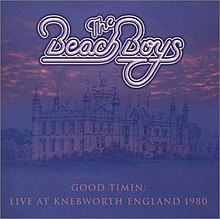
BBKnebworthCover.jpg

The date was June 21, 1980.  This outdoor concert,  recording documents the circumstance of all five original Beach Boys-- the three Wilson brothers, Mike Love, Al Jardine, and Bruce Johnston-- being recorded on stage together for the last time.   There was, of course,  no way for the audience at Knebworth Park to know just how singular was the show they witnessed that night.  The show was fine, but the experience of hearing it now is rather sad.

The concert was not well-attended:  43,000 fans in a 100,000-seat venue.  Acts preceding the Beach Boys included Blues Band, Lindesfarne, Santana, Elkie Brooks, and Mike Oldfield.  The weather, unfortunately, was cold and wet.  Supporting musicians were Ed Carter on guitar, Joe Chemay on bass and backing vocals, Bobby Figueroa on drums, percussion and backing vocals, and Mike Meros on keyboards.

As for the setlist, only three of the songs were from the Beach Boys' current album, Keepin' the Summer Alive, in effect making their show an oldies jukebox.  But they were still a potent live act.

This CD is also available with a DVD documenting the entire concert.

  • The Jimi Hendrix Experience, Are You Experienced? (Reprise, 1967)
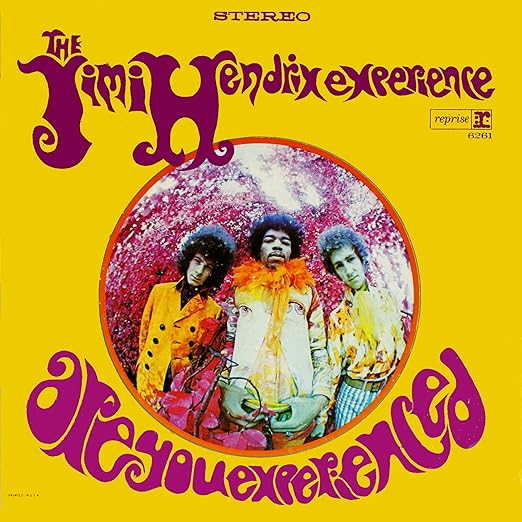
Amazon.com: Jimi Hendrix Are You Experienced Album Cover Photo ...

I recently nabbed a used copy of this extraordinary recording, the 2010 Legacy edition including a DVD bonus disc, at the 2nd&Charles store in Highland, Indiana.  It is hard to overstate the impact this record had, and continues to exert, on pop music, with its guitar licks, thundering rhythms, musical electronic feedback, and acid-soaked sensibility on full display.  The individual tracks are of such consistent quality that it's impossible to single out a handful that are particularly outstanding.  Certainly the album is among the very best to come out of the 1960s, an especially fertile decade for music.
 
Lightly and politely
Recorded in Rotterdam on the last night of a European tour in October and November, 1969.  The quintet is "lost" only in the sense that this is the only edition of Miles's band to document these five players-- Miles, with Wayne Shorter, Chick Correa, Dave Holland, and Jack DeJohnnette.  The drummer was really the only change in Davis's band, which frequently included the other four at about the same time.

I took the trouble to compare these concert selections to the original studio versions, on Bitches Brew, The Sorcerer, and the two-LP compilation Directions.  There was obviously a difference between this quintet and aggregations more than twice its size, but more importantly the studio recordings of Miles Davis were in the late sixties largely in the hands of producer Teo Macero:  like rock music before it, jazz performance took a back seat to record production, and it was Macero who organized and spliced together scores of snippets from the band's studio rehearsals.

 
www.jazzviews.net/uploads/1/5/1/1/15113040/publ...


(First of a series of burns provided by BLB)  I like this album a lot, more than most of Dylan's work this late in his career.  Dylan's always been a word man, more than a music man, and he delivers memorable words here.  The crown jewel is the sixteen-minute "Murder Most Foul," reflecting the JFK assassination, the way the world reacted to it, and Bob's own place in it.

"I Contain Multitudes," "Goodbye Jimmy Reed," "Crossing the Rubicon"...  All memorable, all invite another listening.

The tunes are about what you'd expect on a Dylan album, rootsy and bluesy.


Carolina-chocolate-drops-genuine-negro-jig.jpg
Both discs provide a delightful immersion in bluegrass music.  These musicians, all African American, serve to remind how much of this sort of music, and country music generally, has been a melding of styles all along.  All play multiple instruments and sing stirring vocals.

ZCarolina chocolate drops leaving eden.jpg


  • Thelonious Monk Quartet with John Coltrane, At Carnegie Hall (Blue Note,  1957/ 200? LOC) 
I hadn't listened to this disc, so I'd forgotten how good, how historic it really is.  This is the same quartet who had earlier recorded for Riverside, but the month of working together steadily make these the far superior recordings.


SAD NEWS:  NO MORE CAR CLUB

THE MARCH OF SCIENCE

Yes, its true:  the 2005 Hyundai Elantra has shed its mortal coil.  I bought a used 2019 Accent, only to discover, to my horror, it had no CD player.  Apparently, this has been true for all new cars for quite some time.  The upshot is that I will no longer be driving with 100 discs at my disposal; now I'm trying desperately to receive WDCB, apparently the Chicago area's only jazz radio station.

The music is fine, but my car radio picks it up only intermittently.  There's a classical station whose broadcast often creep over the line to crowd out my jazz.  Even so, I'd like the option of making my own music selections when I choose.

Good thing 'DCB isn't competing with a hip-hop station, of which there are far too many.

NEXT:  Spenser, Part 2

Thursday, April 16, 2020

The Tenure of Kings and Magistrates

N.B.  Yes, it's another manuscript from my days as a scholar, written for Prof. Michael Lieb at UIC, winter 1989.  I was a bit cocky in those days, so I took the liberty of razzing a couple of renowned Milton scholars, mainly because they weren't revolutionary socialists.  That was the reason this piece was rejected by a prestigious Milton journal.  Here it is now, for all to see.


Milton's Tenure and the Logic of Revolution

Revolution takes place on battlefields and barricades, but it first must take root in human minds.  As the old regime-- its politics, institutions, terms of discourse-- appears to lose itself in contradiction and stalemate, the popular uprising furnishes new social layers and new ideas to fill the ideological void.  In 1625, at the age of seventeen, John Milton had written, with all the fervor youth can muster, the patriotic "In Quintum Novembris," in which the wrath of God is visited upon the nefarious papal enemy of James I.  By the time of the English regicide controversy in 1649, both the times and his ideas had undergone just such a revolution, and Milton's The Tenure of Kings and Magistrates furnishes a splendid illustration, in microcosm as it were, of the ideological transformation of an age.

It is in the nature of a revolution to concentrate the historical process of decades or even centuries of development into a matter of months, weeks, days.  The subjective factor in history-- that is to say ideology-- correspondingly assumes predominance in such periods, wherein the more or less conscious interplay of parties and individual persons embodies the unconscious logic of objective historical forces.  Such a moment was January, 1649, when the destiny of the English hinged on the fate of their king, and Milton's argument in The Tenure, "proving that it is Lawfull, and hath been held so through all ages, for any, who have the power, to call to account a Tyrant, or wicked King, and after due conviction, to depose, and put him to death," at once thrust the poet himself into the judgment of history.  Posterity has been singularly divided in its evaluation of his reasoning and his presentation, as if neither Charles nor the Parliamentary capitulators were on trial at all, but rather Milton the regicide, for the events of January and February, 1649.  I take upon myself therefore the thankless (but I hope not fruitless) task of justifying the ways of Milton to his detractors.

Negative generalizations about Milton, of course, are nothing new.  In 1649 Clement Walker scurrilously wrote of him as "a libertine," who "will be tied to no obligation to God or man" (Hill 109), and the label dogged Milton for the remainder of his life.  Since that time, terms purportedly descriptive of Milton's animus have ranged the gamut from "Machiavellian" to "Idealist."  Christopher Hill argues instructively of the futility of pinning such tags on Milton.  England's relaxation of censorship in the mid-1640s unleashed a marvelous proliferation of differentiation of opinion.  The spectrum of Independent politics, within five years of its rupture with the Parliamentary majority, had widened to include Diggers, Levellers, and Fifth Monarchists; radical religious sects -- Congregationalists, Hermetics, Arminian Baptists, Seekers, Behmenists, Socinians, and Ranters-- now openly defied their erstwhile persecutors.  "Milton's reaction to the confusing flux of the mid-forties," Hill observes, "was to return to the Bible, to evolve his own Bible-based theology" (95).  Nor did Milton adhere firmly to any political tendency; it is therefore to the point to define his position negatively:  he was not a Leveller, Digger, Ranter, Muggletonian, or Behmenist, but rather "the great eclectic, the asserter of Christian doctrine who was a member of no church" (99), a political theorist who lived "in a state of permanent dialogue with radical views which he could not wholly accept, yet some of which greatly attracted him" ((113-14).

John Milton


The independent radical contingent which drew Milton in London consisted of disaffected artisans and déclassé intellectuals; collectively they were engaged in dialogue with the laboring classes, especially within the ranks of the army.  What Hill says of Milton's "ambiguous relationship" to the more "orthodox" Puritans, on the one hand, and on the other to the sectaries and "heretics" (97), could be applied as well to the majority of Independents until the regicide crisis.  Buffeted both left and right, their historic role had been to mediate, to reconcile the conflicting classes.  The early months of 1649 quickly dashed their illusions.
Arthur Barker observes in Milton's prose corpus "a steady shift from the Puritan right to the extreme left" (xxiv).  All the more dramatic, then, was the appearance of The Tenure after a silence of nearly five years on questions of state.  Areopagitica had portended a radical shift in Milton's views; by the time of his sonnet to Fairfax he appeared antimonarchist in principle, and inspired by Parliament's victories in the Second Civil War, he soon reached convictions he could scarcely have conceived a year or two earlier.

Milton's own account of The Tenure appeared in the Second Defense of 1654.  On his long silence concerning civil liberty, he wrote, "I said nothing, because I saw that sufficient attention was paid to it by the magistrates; nor did I write anything on the prerogative of the crown, till the king, voted an enemy by the parliament and vanquished in the field, was summoned before the tribunal which condemned him to lose his head."  Milton entered the controversy when a group of Presbyterian ministers cried out against the sentence, and he was particularly incensed by their claim to represent Protestant doctrine.  "I thought that it became me to oppose such a glaring falsehood; and accordingly, without any immediate or personal application to Charles, I showed in an abstract consideration of the question, what might lawfully be done against tyrants."
Owing mostly to its brevity, Milton's retrospective summary is somewhat misleading in several respects.  William B. Hunter understands the purported composition of The Tenure as an "abstract consideration" to imply that Milton was "not specifically concerned with judging or sentencing Charles, and is not thus a regicide, as the term is usually used for an active participant" (56).  Yet it is impossible to imagine any reader in 1649, responding to the tract's frequent appeals to the Sword of God and thunderous evocations of slain monarchs, without thinking Milton any less a regicide than Cromwell, John Bradshaw, or the very executioner of Charles.

True, Milton felt obliged, by training and temperament, to observe the academic conventions of argumentation, and his audience probably expected it; but in The Tenure, he soon finds it necessary to abandon the chimera of "abstract consideration" to speak directly to the subject at hand, the prisoner in the dock and the claims made in his defense.  The most striking feature of the pamphlet, in fact, is its sense of urgency and the vehemence of its denunciation, and not its scholarly documentation or classical construction.  Almost as soon as it is established, the protocol of argumentation, as if overwhelmed by the headlong rush of people and events, is repeatedly violated.

Milton, moreover, may have been a trifle disingenuous when he explained, a bit further along in the Second Defense, that the regicide pamphlet had been written "rather to reconcile the minds of the people to the event, than to discuss the legitimacy of that particular sentence which concerned the magistrates".  Don M. Wolfe shows just how far Milton goes in The Tenure not to reconcile, but rather to antagonize the Presbyterian clergy.  In the wake of the execution of Charles, other, more conciliatory, apologies for regicide were forthcoming,. but generally these were explicitly counter-revolutionary, arguing regicide against a "Leveling confusion" and signaling the rightward turn of the Independents in suppression of their erstwhile allies, the better to join forces with "the prosperous middle classes, of whom the Presbyterian ministry were the most influential representatives" (217).   Milton chose instead to cast his fate with the insurgents and brave the wrath of respectable public opinion.  Indeed, if Milton had entertained any hope of reconciliation with the "dancing Divines," he wrote the tract to undermine that very  possibility.

"So completely... does [Lylburne's] Regal Tyrannie anticipate Milton's arguments," says Wolfe, "that it is difficult not to take for granted that it lay on his desk as he wrote The Tenure and A Defense of the People of England (182).  Despite its religious foundations and biblical trappings, the basic appeal of The Tenure stays "in the main humanistic and secular" (216).  In Barker's consideration, the fundamentals of Leveller political theory are expressed as secular analogues to the principles of congregational church government:

The priesthood of all believers became the natural equality of all men; Christian liberty, the natural liberty and right of every individual to consent to and share in the government under which he lives; the church covenant a social contract of agreement of the people; God's law, the law of nature expressed in the fundamental laws of the constitution according to which the executive governs by the authority received from the people or its representatives (141).

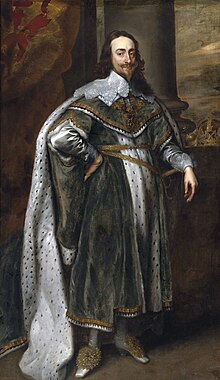
King Charles I after original by van Dyck.jpg
 King Charles I

The Tenure proceeds from this mutual interpenetration of religion and politics.  "No man who knows ought, can be so stupid to deny that all men naturally were borne free," Milton postulates, in the "image and resemblance of God himself... born to command, and not to obey" (Hughes 199).  In the argument that follows, Milton attempts a syllogism of linked propositions, a chain of reasoning leading to the carefully-worded conclusion "that power, whether ordinary, or if that faile, extraordinary so executing [the] intent of God, is lawfull, and not to be resisted" (198).  Through fused appeals to God and reason, he laboriously connects the prerogative and duty of church discipline, extending equally to "King and Peasant," to the mandate of "the civil Sword, to the cutting off without exemption him that capitally offends.  Seeing that Justice and Religion are from the same God, and works of justice ofttimes more acceptable" (222).  He is able to rest his case on 'this golden rule of justice and moralitie , as well as of Arithmetic, out of three termes which they admitt, will as certainly and unavoydably bring out the fourth, as any Probleme that ever Euclid, or Apollonius made good by demonstration" (253).

Out of religion and reason Milton synthesizes a doctrine of overriding public necessity; this had hitherto been the King's sole prerogative to decide, the very essence of political power.  To Milton, a historical imperative justified "the present Parlament & Army, in the glorious way wherein Justice and Victory hath set them; the only warrants through all ages, next under immediat Revelation, to exercise supream power" (194).  Small wonder that all parties to the regicide controversy, vainly seeking the hand of Providence in the affairs of men, should founder on the precise determination of the divine will.  The London ministers in their Representation maintained that "God doth not approve the practice of whatsoever his Providence doth permit" (Hughes 55).  The Presbyterians reasoned that, against the wickedness of the heretical army, God was trying the souls of true Christians; the outright royalists, for their  part, supposed God to be harding the hearts of their enemies prior to pronouncing punishment upon them (52).  The interpretation of scripture on all sides went into contortions, as though under the weight of a higher law of historical necessity.

"The strength and originality of The Tenure come from its frank acceptance of revolution as a force in history," Hill recognizes (167).  From the standpoint of formal argument, then, Milton's most effective gambit is his persuasive demonstration of inconsistency on the part of his Presbyterian opponents, who now balk at the inevitable culmination of the ecclesiastical struggle they themselves had long before initiated:

He who but erewhile in the Pulpits was a cursed Tyrant... is now, though nothing penitent or alter'd from his first principles, a lawfull Magistrate, a Sovran Lord, the Lords anointed, not to be touch'd, though by themselves imprison'd.  As if this onely were obedience, to preserve the mere useless bulke of his person, and that onely in prison not in the field, and to disobey his commands, deny him his dignity and office, every where to resist his power but where they thinke it onely surviving in their own faction (197).
Milton pointedly asks the Presbyterians why, during the time Charles was their captive, they did not "restore him all that while to the true life of a King...  The truth therefore is, both that they would not, and that indeed they could not without thir own certain destruction" (234).  The straightforward exigencies of self-preservation, regarded by the Presbyterians as the "ignoblest dictate of the law of nature" (Hughes 65) became the most persuasive element of Milton's argument, his appeals to God and reason notwithstanding.  Not by accident, The Tenure is dressed in defensive formulations:  "They tell us that the law of nature justifies any man to defend himself... :  let them shew us then why the same Law, may not justifie much more a State or whole people, to doe justice upon him" (254); the Presbyterians, perversely interpreting Scripture in pursuit of factional aims, are the blind and lame Defenders of Jerusalem" (256), who "with Scripture in their mouths, gloss'd and fitted for thir turnes with a double contradictory sense, [transform] the sacred verity of God, to an idol with two faces" (195).  On  the issue of the deposition of Charles, they appear "with a riding covnant in thir mouths, seeming to swear counter almost in the same breath Allegiance and no Allegiance" (232).

The logic of revolutionary upheaval, of class conflict in its most intense manifestation, has brought legal and scriptural argumentation to an impasse, "when they that give it, see not for madness and vexation of thir ends lost, that those Statutes and Scriptures which both falsely and scandalously, they wrest against their Friends and Associates, would, by sentence of the common adversarie fall first and heaviest on their own heads" (195).  Arguing from historical necessity, Milton takes a tentative but nonetheless definitive step away from idealism-- the image of God's kingdom-- to materialism, an advocacy of the priorities of revolution to undercut "privileges, customs, forms, and that old entanglement of Iniquity, thir gibrish Lawes" (193).

Milton's argument achieves its force, not only through its sophisticated critique of despotism's new-found champions, but also from his conviction, shared by all revolutionists of modern times, that he represented an historical vanguard against the claims of outworn and debased ideals.  Milton's unequivocal stress upon the international ramifications of the English revolution,, his native country having "the honour to precede other Nations who are now labouring to be our followers" (236), provides yet more evidence of the scope of his revolutionary convictions.  Clearly, to paraphrase Engels more than two hundred years beyond his time, Milton was no longer content to interpret the world; he was an active participant in the struggle to change it.

Visible in The Tenure also, however, are indications of significant and severe limitations to Milton's democratic ideas.  His claims on behalf of a "mutual bond of amity and brotherhood between man and man all over the World" must be balanced against his offhandedly invidious comparison of the native tyrant with "a Turk, a Sarasin, a Heathen" (215).  Although Milton decries the notion that Englishmen should ever be enslaved by kings, The Tenure attacks the chattel slavery from which Englishmen derived enormous profits and by which they were to uproot and afflict others made in the image of God.  Between the lines of his ringing declamation on behalf of "liberty and the flourishing deeds of a reformed Common-wealth" is buried the embryonic concept of a world divided between "civilized" and "heathen" nations.

It may also be argued that, for all his fulminations against the Presbyterians' "insisting with much niceness on the unnecessariest clause of their Covnant" (194), Milton's own strategy was no less constrained by an appeal to another covenant, the coronation oath violated by Charles, the priority of which occupies such a large expanse of The Tenure.  The essence of the regicides' legal case against Charles was his abrogation of the bourgeois holy of holies, the contract.  "For learned and popular readers alike," Hughes observes, "the charge of perjury comprised the whole case against Charles," as if the decade-long tumult which divided all England against itself could be reduced to a simple breach of contract (98).  The pace of events has outstripped the capacity of established institutions and modes of discourse.

Hence the curious tension in The Tenure between Milton's stodgy, plodding methodology, trotting out the required citations pro forma, and the explosive character of the events it attempts to justify.  The appeal to abstract principles with which it proceeds is continually offset by reminders of contemporary civil war, the bloodiness of Charles and the perfidy of "Malignant backsliders."  Milton's would-be classical oration is repeatedly interrupted by digressions replying to the main arguments of the Representation.  The tract is liberally sprinkled with transparent appeals to class hatred of the Presbyterian hierarchy, whose "hope to bee made Classic and Provincial Lords led them on, while pluralities greas'd them thick and deep, to the shame and scandal of Religion, more than all the Sects and Heresies they exclaim against" (195-6).  Such outbursts appear incongruous set within a method of argument broadly Ciceronian, firmly anchored to an appeal to reason yet striving to arouse the passionate indignation of his audience.

"If men within themselves would be govern'd by reason and not verbally give up thir understanding to a double tyrannie of Custom from without and blind affections within, they would discerne better, what it is to favour and uphold the Tyrant of a Nation" (190).  Milton's exordium begins with the frank recognition of the volatility of public opinion and the shrill cries of reaction in the wake of Cromwell's insurrection and the indictment against Charles.  The ensuing narratio sets forth his principal propositions and supports them with citations from classical, Jewish, Christian, and Presbyterian sources.  By the time his argument reaches the plateau of the confirmatio, however, Milton lets slip his impatience with the entire procedure:

Against whom what the people lawfully may doe, as against a common pest, and destroyer of mankinde, I suppose no man of clear judgement need go furder to be guided then by the very principles of nature in him.  But because it is the vulgar folly of men to desert thir own reason, and shutting thir eyes to t think they see best with other mens, I shall shew by such examples as ought to have most waight with us, what hath been don in this case heretofore (212).

 Milton's preliminary definition of a tyrant is here accompanied by a barrage of rhetorical flourishes, and there are two rather long digressions from what might otherwise be a rather tedious documentation.  The first amounts to a characterization of Charles as an "outlander" within his own kingdom, while the second purports, unconvincingly, to dissociate "the true church" from the antimonarchist label thrust upon it by the Presbyterians.  In between the two digressions, Milton cites New Testament books along with his own antiprelatical maxims, delves into English and Scottish historians to find a support in common law, links ecclesiastical and civil law, and ends with an array of Protestant and Presbyterian authorities from the sixteenth century.  The line of argumentation, marshaling the custom and authority of past ages, is less impressive here than the tendency of the digressions to address specifically the charges against King Charles, as if Milton were momentarily dropping the pretense of "abstract consideration."

Oliver Cromwell by Samuel Cooper.jpg
Oliver Cromwell

But this latter tendency carries through the remainder of The Tenure, wherein such digressions appear ever more regularly and the tone of Milton's rhetorical shifts noticeably toward pungent invective and defiance of public opinion.  Weaker, as Hill notes, in defense than in counter-attack (167-8), Milton reserves his most persuasive rhetoric for the refutations dissection and demystification of the nature of covenants and for the peroration's dramatic consideration of the present crisis in the judgment of posterity.  As his final appeal comes to rest on historical necessity, the defense of the people's right to revolution, and the exemption of ecclesiastical officials from civil affairs, the very structure of syllogistic reasoning with which Milton began becomes unraveled, as from a "seam" buried among its fundamental premises.

Perhaps the most remarkable result of this breakdown is Milton's reliance upon sharp satire, particularly in the concluding sections of The Tenure, as a rhetorical fortification for the inadequacies  of his intended syllogism.  Vadoz has perceived in Milton's satiric barbs "a talent for catching up to a mistake on his adversary's part, explaining it to him, and then with great force and emphasis showing him the consequences" (Hughes 141), an ability that reminds one of Heine's famous comment two centuries hence on Lessing, who, not content with cutting off the head of his opponent, was malicious enough to lift it from the ground and show the public that it was quite empty.

Such recourse to satire was quite necessary, for the old syllogisms simply didn't add up during the storm of revolution.  Even now the ethical humanist, liberal evaluation of Milton's Tenure depends upon the ossified, codified wisdom of "normal" times (if such times can be said to exist late in the twentieth century), having little conception of the superseding logic of historical change.  Thus Barker fails to grasp the issue when he finds in Milton's revolutionary prose "the painful attempt of a sincere but not markedly precise mind to achieve coherence of thought in the midst of social disintegration...  It is of illogicality rather than insincerity that he should be accused" (xviii-xix).

Probably the most egregious modern attack on Milton's revolutionary ideas was mounted by Wolfe, who argues that the Cromwell regime constituted a setback for the democratic aims of the revolution and that the terms of the Presbyterian Covenant would have provided a shorter road to constitutional government.  Where Milton was mindful of the "implacable revenge" of tyrants, Wolfe insists still upon the possibility of a peaceful resolution of a conflict which had by 1649 consumed tens of thousands of lives and brought the masses of England upon the stage of history.  He saw in Milton's justification of regicide "an untenable position...  the dilemma of justifying at once military coercion and democratic ideology" (215) and declared the Rump's seizure of power and trial of Charles I "plainly illegal" (231), without considering the legitimacy of revolution's challenge to the legal basis of monarchy.  His antipathy to the claims of revolution, moreover, leads Wolfe to a specious identification of Cromwell as "a religious fascist" (197) and to label the Independent regime in Parliament a "benevolent fascism" (205), terms hardly applicable to the seventeenth century.  Like most liberal-democratic critiques of revolution, Wolfe's does not acknowledge its own debt to the ideological crucible of revolutions past.

John T. Shawcross, instead of accusing Milton of illogicality, seems to charge The Tenure with a superfluity of logic and a misunderstanding of "political man":  "It was not until some years later that he realized that fit audience is always few; and perhaps he never really learned that in the realm of government idealism is not only ineffectual but generally unrecognized" (147).  Milton's error appears to have been a case of casting pearls before swine, of believing "that one can argue tellingly, whereas other, more 'practical' men have known that the best argument 'to persuade' involves tangible 'rewards'" (150).  Like Barker, Shawcross declares Milton an ineffectual political thinker, an "unpractical idealist" who mistakenly presupposed "that man confronted with fact or argument and logic will accept or at least weigh the evidence and conclusions" (156).  The Tenure therefore "fails in achieving what is really desired Kongs' any kind of broad scale in its own time."  In Milton's argument, says Shawcross, there is "the overly of debate, of contemporary issues and men, of rebuttal of specific statements and actions-- and in these things Milton's effect was short-lived and gnat-like" (143).

Indeed it is difficult now to measure with any precision the impact The Tenure exerted upon the course of history when it first appeared, and scholars on either side of the issue have not been able to answer the question with any degree of certainty (Hunter 57).  In any case, I would venture to say that Milton had more impact upon his historical moment than together Professors Shawcross, Wolfe, Barker, Hughes and Hill have mustered upon ours.  Milton in 1649 was no ivory-tower intellectual; he was a revolutionist coming directly to grips with the nascent forces of modern history.

PS:  To my horror, I haven't been able to locate my bibliography.  If I ever do, I'll append it forthwith.

The Tenure of Kings and Magistrates: complete text


IN MY ROTATION:


OUR CAR CLUB:
  • Gene Ammons, Gentle Jug (Prestige, 1961, 1962)


NEXT:  Herbie Nichols


Saturday, January 25, 2020

Revisiting Nowhere

NB:  The following unpublished ms. was submitted to Prof. A. Ruoff's pastoral literature seminar at UIC in the spring of 1989.  She didn't particularly like it, but I'm posting it anyway for the sake of my own immortality.


1.  Concerning the Dearth of Communist Utopias

At the age of eighty George Bernard Shaw recalled William Morris on the fortieth anniversary of his death.  "Morris, when he had to define himself politically, called himself a Communist,"  Shaw began.  "It was the only word he was comfortable with (ix)."  Though twenty-two years apart in age and often at odds on even fundamental political questions, the two men's association in the 1880s and '90s ripened into a lasting friendship.  Of the entire British socialist movement, wrote Shaw, Morris alone was able to articulate his "vision of the life to come on a happy earth, and his values that went so much deeper into eternity than the surplus value of Marx."

This vision only he himself could propagate; and so he had to go to the street corner even though he was thoroughly miserable there, and  to think out and write out for delivery in public halls lectures which were far too pregnant and profound to be extemporized...  His painfully written lectures survive as the best books in the Bible of Socialism.

Morris's socialist essays and lectures, unlike his early verse, Shaw added,

did not come easily and happily:  he would never have written Sigurd if it had cost him half the hard brain work Socialism extorted from him.  But that was how the idle singer of an empty day became a prophet and a saint (xxxviii-xxxix).

The aesthetic philosophy of his early years became Morris's bridge to Marxism.  He developed the radical critique of modern art implicit in the Pre-Raphaelite movement of Rossetti and Burne-Jones, and he extended the judgment of nineteenth-century England he had distilled from the writings of Carlyle and Ruskin.  In his pamphlet "How I Became a Socialist," Morris wrote,

Apart from my desire to produce beautiful things, the leading passion of my life is hatred of modern civilization...  Was it all to end in a counting house, on the top of a cinder heap, with Podsnap's drawing-room in the offing, and a Whig committee, dealing out champagne to the rich and margarine to the poor in such convenient proportions, as would make all men contented together, though the pleasure of the eyes have ever gone from the world, and the place of Homer was to be taken by Huxley?  (Complete Works 23, 279-80)

His hatred of modern civilization was thoroughgoing and specific.  Morris hated the downright ugliness of the nineteenth century, the age of the hot room and the stinking railway carriage, the soap-works with their smoke-vomiting chimneys, the sound of riveting and hammering, its plague of bookmaking and its "beastly ugly" coins.  He hated the "sickening vulgarity" of his times, the "cockney villas of the well-to-do" along the Thames about Hampton Court.

Most of all, Morris hated the deep-going hypocrisy of bourgeois life, its "parliamentary commercial sham-kings," its artificial necessities, its poorhouses and prisons, its jingoism and imperialism; he reserved his most pungent invective for "the respectable commercial marriage-bed" and the deformed creatures who occupied it, with their "blue-devils" and "Mulleygrubs, " the nineteenth-century disease of idleness.  Behind the so-called "splendid works of imagination and intellect" Victorian literature boasted itself, Morris discovered the modern intellectual's "sour distaste for the changing drama of the year," his fashionable attitude of "life as a thing to be borne, rather than enjoyed."  Vainglorious Britain, to Morris, was truly a land where the sun never set.  His summary judgment of his era was that its "great achievement...  was the making of machines which were wonders of invention, skill, and patience, and which were used for the production of measureless quantities of worthless make-shifts" (CW 16, 96).


William Morris published News from Nowhere, in both serial and book form, in 1890.  Then and now, it stands alone as a comprehensive, visceral description of a communist paradise.  Based upon its author's love of the beautiful, as well as his hatred of modern civilization, Nowhere is much more than a trenchant and important critique of capitalism; it is virtually the only imaginary voyage into "the realm of freedom" of any consequence or degree of specificity the Marxist movement has ever attempted.  The avoidance of such speculation by the major architects of Marxism is understandable, and in the final analysis probably wise, for the revolutionary movement of our times is necessarily bound to the politics and turmoil of today; it must define itself more in terms of what it is against-- the slide of humanity into barbarism or extinction-- than by a utopian vision of what it is for.  Indeed, it may be useful to distinguish Marxism, as the science of revolution, from communism, as a mode of human existence which can be defined only by a transformed, post-revolutionary humanity

Morris stood on the best Marxist authority available when his imagined voyage into the distant future came to mirror the dearest features of the distant past.  His Nowhere is precisely the negation of the nineteenth century he hated so passionately, and what he foresaw is best expressed in the novel's subtitle, "An Epoch of Rest."  A series of parallel images from the nineteenth and twenty-first centuries, Morris's vision of communist man is even more radically different from those of his twentieth century successors than it was from that of his Fabian contemporaries.

2.  Concerning Morris's and Other Utopias

Edward Bellamy
's Looking Backward, a Fabian-styled tract from America, presented a view of humanity's future almost the direct antithesis of Morris's.  With its labor armies, omnipresent "telephone" (radio), and array of mechanical marvels, Bellamy's utopian novel served as the immediate pretext for News from Nowhere.  Regarding the shiny, Buck Rogers world forecast by Bellamy, Morris wrote that he "wouldn't want to live in such a Cockney paradise," and to his daughter May he growled that "if they brigaded him into a regiment of workers he would just lie on his back and kick" (May Morris, xxviii).


The general drift of Nowhere, in fact, amounts to an outline of the end of the machine age; man's vaunted mastery of mechanical force, if present in Nowhere, is almost entirely hidden and barely regarded at all by its inhabitants.  On "the Morrow of the Revolution," the blight of Manchester no longer exists, and Reading has been cleared and rebuilt.  The twenty-first century bows to Bellamy in only a very few instances, entirely inessential to Morris's vision, such as the mysterious "force-barges" his protagonist encounters on the Thames.  Other questions of moment are similarly left vague; while it is clear that modern European languages have survived more or less intact, the geography of the world is hardly touched upon.  Of the fate of the United States, it is observed only that "for nearly a hundred years the people of the northern parts of America have been engaged in gradually making a dwelling-place out of a stinking dust-heap" (CW 16, 98).  Reference is also made to "unsocial countries" and "unhappy people" in some unspecified parts of the world, though nation no longer oppresses nation and imperialism has ended.  Though the city of London remains as an intellectual center to an England of towns and villages, it is a London of pleasant orchards and gardens, of clean and colorful open-air markets.

In order to tell how all this comes about, Morris created from his reading and from his own experiences one of the most vivid and arresting of modern narratives of the strikes and street barricades of masses in motion.  His passages devoted to an imaginary 1952 English revolution cogently evoke the actual problems and experience of the twentieth-century movement.  They contain a rigorous treatment of the current of reformism ("state socialism") then gaining a foothold in the British labor movement, along with an analysis of craft-unionism and corrupt labor officialdom.  Morris accurately forecasts the economic crises of the twentieth century's vicious repressions unleashed by the British ruling class nearly a half century after he died.  His recreation of the great Trafalgar Square demonstrations of 1887, in its proposal of a working class united under a "Committee of Public Safety," not only draws upon the struggle of the Paris Communards, but anticipates in a manner unique in the literature of nineteenth-century socialism the soviets and dual power configurations typical of modern revolution.  Even the counter-revolutionary development of fascist organizations ("Friends of Order") finds a place in the great revolution Morris dreamed.


The years of the late twentieth century, as Morris foresaw them immediately on the heels of the revolution, would be "brisk, hot-headed times," a time for the venting of hatred upon commercial civilization in all its aspects.  The earliest act of the socialized English proceeds in 1955, with its "great clearing of houses" in London, the erasure of the slums, grime, and ugliness bequeathed by the nineteenth century.  Even now in the twenty-first century, a main point of contention among the people of Nowhere is the ongoing debate over what from the past is worth preserving.  The historical process is largely a question of "clearing," of erasing the undesirable vestiges of the past.  Of the dozen-odd buildings permitted to remain that are mentioned, most-- the British Museum and the Bodleian Library among them-- are preserved expressly as conservatories of the past, the domain of a dying breed of scholars and historians.  Windsor Castle is now a museum, and at Wallingford another museum of manufactured articles allows the protagonist to trace the resurgence of handicraft and home industry from the ruins of the factory system.  As for the rest, Londoners are still undecided about the fate of Westminster Abbey, from which not even two hundred years have successfully effaced the accumulated dirt.  In a touch reminscent of Sir Thomas More's golden manacles and chamberpots, the Houses of Parliament are now transformed into a dung market.


With the burden of industrial civilization removed, the people of Nowhere revert to the life-patterns of traditional human society, as they existed before the great blight of commercialism set in during the Renaissance.  The examples of architecture and interior decoration we see are reminders of fourteenth-century Gothic and Byzantine models, and there is nothing "modern" in Nowhere's manner of dress, decoration, or everyday implements.  The arts, insofar as we are permitted to learn of them (from the frieze, for example, which graces the dining hall of the Bloomsbury Market, or the Welsh folk singers mentioned as entertainment), have reverted to traditional forms as well.  The settling of society back into time-worn tradition precludes such a civilization of Eloi and Morlocks as H. G. Wells envisioned, for Nowhere presents a humanity completely integrated and without alienation, a society whose members address each other as "neighbors" and whose basic social units range from monogamous families to such collective "phalansteries" as Fourier dreamed of.   Throughout England, one is almost never out of a sight of a human dwelling, and the norm seems to be the small, planned community of quadrangles surrounded by pleasant rural scenery, even on the outskirts of London.  "We discourage centralisation all we can" (68), explains one character; "We like everything trim and clean" (73) says another.  Communist society, it is shown, is "very well off as to politics-- because we have none" (85).  Political life, a sort of participatory democracy organized by discussion and decision in village "motes," has indeed become a matter of "the administration of things," in the sense meant by Engels.


3.   Concerning Pastoral in Nowhere

Morris used the term "utopian romance" to describe News from Nowhere, but as Middlebro' points out (11), it is better to characterize it as an arcadian romance.  The traditions of the pastoral find their fullest exploration in Nowhere, expressed with a conviction not present elsewhere in the literature of the Victorian age.  Once transported to the future, the narrator's consciousness begins outdoors with "a delicious relief caused by the fresh air and pleasant breeze," a sensation of "measureless wonder:  a beautiful bright morning seemingly of early June" (5).  The pretty houses on the banks of the Thames at Hammersmith appear  comfortable, and as if, so to say, "alive and sympathetic with the life of the dwellers in them."  he notices gardens growing down to the water's edge, "in which the flowers were now blooming luxuriantly, and sending delicious waves of summer scent over the eddying stream" and the vistas of forests beyond (9).

The London of the future is painted in sensuous colors, with "wide sunny meadows and garden-like tillage," pleasant lanes, teeming gardens, and enchanting cottages" (23).  Kensington Gardens is now a romantic, wooded wild spot in the midst of the city, and Trafalgar Square is the site of carefully tended orchards.  The hideous iron suspension bridges of Morris's day have been replaced by structures "of stone arches, splendidly solid, and as graceful as they were strong" (8).  The sensuousness extends to the smallest detail of life, to the delicious varieties of bread, the table settings, the roses "like the produce of an old country garden" (15).

The pastoral tradition is worked into the novel's characters as well; one offhanded remark by Clara on Nowhere's beautifully embroidered humanity, for example, could have been penned by Spenser, if not by Theocritus himself:  "you see we are not going to make the bright day and the flowers feel ashamed of themselves."  Truly, she seems "born out of the summer day itself" (142).  The acme of ambition in Nowhere, moreover, is to show one's prowess at mowing down hay, and Morris inserts a pastoral bragging contest between carvers and hay mowers.  Humanity's principal source of grief is not death, but "love-madness," with its centuries of bucolic tradition trailing along behind.  Communist society triumphs over the tragedies of love by eliminating capitalism's "artificial perversions of the sexual passions," and "family tyranny" (81).

The English pastoral adaptations Morris knew from the seventeenth and eighteenth centuries lend a decidedly Georgic cast to his imaginative vision.  His chief theme of alienation-- the joy of living contrasted with the "outside" observer of life-- is directly descended from Milton's "L'Allegro" and "Il Penseroso."  Also prominent are the conventions of the English topographical poem with its allegorical "circuit walk," for the heart of News from Nowhere is its author's symbolic journey through his own past.  The novel is filled with eighteenth-century genre scenes, of characters around the hearth singing for each other and telling stories, rather like "The Cotter's Saturday Night."  There is even a glimpse of tent people camping in the Oxfordshire countryside, evoking the scholar gypsy of English folklore.


But Nowhere, like the Idylls and Eclogues of yore, goes nowhere.  It presents a static design, very much on the order of the floral patterns in Morris's decorative fabrics and wallpapers, a world beyond time.  With the end of the epoch of contradiction between man and nature, Nowhere signals as well the end of history's forward momentum.  Morris's linear narrative device, i.e. the intrusion of the nineteenth-century Guest into this perfect equilibrium, is the sole extrusion of the Romanticism of the author's own time, and significantly Guest remains an unassimilable element, unable to achieve the necessary metamorphosis of decades and centuries into a man of the future.

The key element Morris emphasizes is the gradual transformation of man to rejoin himself to eternal nature, quite the reverse of Virgil's "prophetic" Eclogue of the transformation of nature conforming to fixed human desire, suggested by Leon Trotsky's remarks addressed to the revival of Russian pastoralism in his own time:

The poetry of the earth is not eternal, but changeable, and man began to sing articulate songs only after he had placed between himself and the earth implements and instruments which were the first simple machines.  Through the machine, man in Socialist society will command nature in its entirety, with its grouse and its sturgeons.  He will point out places for mountains and for passes.  He will change the course of the rivers, and he will lay down rules for the oceans...  Of course this does not mean that the entire globe will be marked off into boxes, that the forests will be turned into parks and gardens.  Most likely, thickets and forests and grouse and tigers will remain, but only where man commands them to remain.  And man will do it so well that the tiger won't even notice the machine, or feel the change, but will live as he lived in primeval times (252).


4.  Concerning the Nature of Work and the Work of Nature

It was the common assumption, wrote Morris of an age where, "the one aim of all people... was to avoid work," that "while the ordinary daily work of the world would be done entirely by automatic machinery, the energies of the more intelligent part of mankind would be set free to follow the higher forms of the arts, as well as science and the study of history" (178).  If Nowhere "had cast away riches and attained to wealth," it was not without surmounting the great challenge of the earliest post-revolutionary society.  "A kind of disappointment seemed coming over us," says old Hammond, "and the prophecies of some of the reactionists of past times seemed as if they would come true, and a dull level of utilitarian comfort be the end for a while of our aspirations and success... [H]ow if it should make men dull by giving them too much time for thought or idle musing?"  Nowhere's remedy became "the production of what used to be called art, but which has no name amongst us now, because it has become a necessary part of the labour of every man who produces" (133).

The post-revolutionary "exodus of the people from the town to the country" resulted in a gradual recovery of "those arts of life which they had lost" (177) during the commercial epoch and a return to the crafts of carpentering, smithing, etc.  Thus began a rebirth of hand industry, learned first by watching the operation of machinery, then by refining relearned technique into art, through decades of trial and error, much in the manner of Morris himself looking backward to tradition for the precise shade of dye for his fabrics.  The ultimate incentive to labor was then revealed to be, as in Fourier and the manuscripts of the young Marx, "the reward of creation."  "All work is now pleasurable," says Hammond, "either because of the hope of gain in honour and wealth with which the work is done...  or else because it has grown into a pleasurable habit; and lastly...  because there is conscious sensuous pleasure in the work itself; it is done, that is, by artists" (92).  The modern gulf between physical and intellectual labor is bridged, mostly to the detriment of the sort of scholarship that our age has elevated into a fetish, brooding over the still sad music of humanity.  It is suggested, even with some misgivings, that the study of history may very well cease along with the historical process itself and with interest in pure science, of which, suggests one character, "though it is no longer the only innocent occupation which is thought worth an intelligent man spending his time upon, as it once was, yet there are, and I suppose will be, many people who are excited by its conquest of difficulties, and care for it more than for anything else."  To these vain pursuits, Morris counterposes "easy-hard" labor, such as entire communities might perform during a hay harvest, or in a road-mending scene straight out of Ruskin's days at Oxford:  "It's down good sport trying to see how much pick-work one can get into an hour" (47).  The nineteenth century's obsession with books, "reactionary novels" and abstract mathematics has been replaced by a passion for open-air work shared by the human community and by the "work-pleasure" accrued by individuals in support of what was in Morris's day called the "lesser arts."  The notion of fine art and belle lettres still survives in Nowhere, but it is frankly acknowledged a relic from the age of alienated labor.  As Lionel Trilling  observed, "There are no geniuses in News from Nowhere."

In times of slavery, Morris wrote, it was considered "natural" to think that men "should try to make nature their slave, since they thought "nature" was something outside them" (179).  What makes Nowhere unique in modern literature is its depiction of a world that has thought beneath the origins of history to exorcise this demon of modernity, the impulse toward domination.  Of his last glimpse of Nowhere, Morris's nineteenth-century Guest brings back the vision of long-sought peace between man and nature, the image of a church festival, bedecked and festooned with flowers, of which "the best ornament was the crowd of handsome, happy-looking men and women...  like a bed of tulips in the sun" (208).


BIBLIOGRAPHY

Calhoun, Blue.  The Pastoral Vision of William Morris:  The Earthly Paradise.  Athens GA:  U of          
     Georgia P, 1975.
Frye, Northrop.  "Past and Future in Morris," Studies in Romanticism 21 (Fall 1982):  303-318.
Middlebro', Tom.  "Brief Thoughts on News from Nowhere."  Journal of the William Morris
     Society 2, no, 4 (summer 1970):  8-12.
"Morris and Trafalgar Square," Journal of the William Morris Society 1, no. 1 (winter 1961):  28-31.
Morris, William.  The Collected Works of William Morris, ed. May Morris.  Volume 16:  News from
      Nowhere, 1-211.  New York:  Russell & Russell, 1966.
Shaw, George Bernard.  "Morris As I Knew Him," foreword to May Morris, William Morris:  Artist
      Writer, Socialist:  Volume 2, Morris As a Socialist.  New York:  Russell & Russell, 1966.
Trilling, Lionel.  "Aggression and Utopia:  "A Note on William Morris's News from Nowhere,"
         Psychoanalytic Quarterly 42, no. 2 (April 1973):  214-225.
Trotsky, Leon.  Literature and Revolution.  Ann Arbor:  U of Michigan P, 1968.


IN MY ROTATION:


Generally speaking, Beefheart's music recorded from live setting should be considered footnotes to his studio output.  The legal status of this pair in particular isn't clear; copyright law in Europe and in the USA are not the same.  Be that as it may, the recordings here are delightful.


As their titles make clear, both of these albums are compilations taken from various live performances and several different editions of Beefheart's Magic Bands over approximately one decade, the first from shows in the USA and the other from the UK.  In both instances, the recording quality varies from show to show, but it is generally good.

Most enthusiasts will welcome renditions of tunes that are unavailable elsewhere.  "Black Snake Moan," a pure Delta blues, is present on both collections.  "One Nest Rolls After Another" is an oddity in itself.  And on this latter-day version of "Big Eyed Beans from Venus," it's up to Mr. Gary "Midnight Hat" Snyder and Mr. Jeff Morris Tepper to hit "that long, lunar note" on their guitars.

From the USA collection, one-third of the program-- six selections-- were cherry-picked from the 1981 California concert, which is available in its entirety on the familiar bootleg, Best Batch Yet.  From the UK set, six tracks were similarly selected from a 1980 show in Liverpool.

One can hear two harmonicas on the renditions of "Grow Fins" from the Bottom Line show in New York, 1977. 


  • Dizzy Gillespie, A Portrait of Duke Ellington (Essential Jazz Classics/ original label Verve? 1960)

  • Wardell Gray, Way Out Wardell (Modern/ Boplicity, 1947)


This set gives me the opportunity to supplant several CDR rips I've kept for years, and also a good reason to revisit these masterpiece albums.  In addition to the usual caveats regarding the Enlightenment sets, I see that a few essential tracks have been omitted:  Where is "Friday the Thirteenth" from Rollins's early collaboration with Thelonious Monk?  And from the final album in this collection, Tour de Force, what happened to "B. Quick" and "B. Swift"?


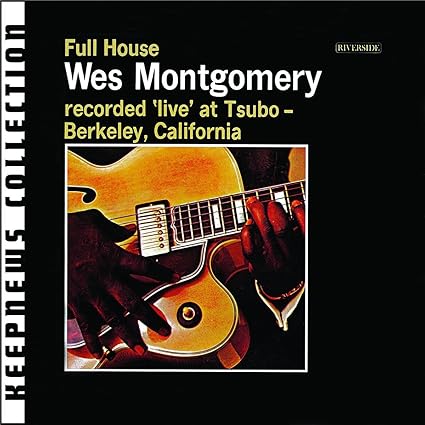
  • Wes Montgomery, Full House (Riverside, 1962)

A very old friend.  Just a homemade needle-drop; sounds great to me.  Only the original six tracks, of course.  I have to seriously consider this for the Elantra Collection.

Full House


Sathima Bea Benjamin with Abdullah Ibrahim, 1979


OUR CAR CLUB:


Image result for piano reflections duke ellington


  • Duke Ellington, Piano Reflections (Capitol, 1953)
I first heard this album while still in my teens, and it had a lot to do with my becoming a devotee of Duke and of jazz in general.  The CD reissue contains 15 tracks, mostly trio performances by the pianist with Wendell Marshall on bass and either Butch Ballard or Dave Black on drums.  One exception is "Melancholia," performed by Ellington accompanied by string bass only.  (Some years ago, I acquired the sheet music and attempted to play this tune:  too damn hard).


The versions of "Prelude to a Kiss"  and "In a Sentimental Mood" contained herein were surely the first I ever heard of these tunes.


NEXT:  John Milton, The English Revolution, And The Execution Of Charles I