Search This Blog

Monday, August 10, 2020

Beyond the Pale, part 2


III.


... [T]hey say it is the fatal destiny of that land, that no purposes whatsoever which are meant for her good will prosper or take good effect; which, whether it proceed from the very genius of the soil, or influence of the stars, or that Almighty God hath not yet appointed the time of her reformation, or that He reserveth her in the unquiet state still for some secret scourge, which shall by her come unto England, it is hard to be known, but yet much to be feared. 11


Historian Cyril Falls rightly emphasizes the qualitative disparity between the societies of England and Ireland in the sixteenth century, maintaining that there was "scarcely a point of contact" between them.12   Irish society at the time ranged from herdsmen in the remote "desert" interior of the country, through Irish freeholders and a few, generally hibernicized, Englishmen settled upon confiscated Irish estates, to the residents of the English Pale of villages and towns in garrisoned districts.  The citizens of Dublin, in contrast to the great majority of the Irish, were greatly dependent on the English Crown, and the English-Irish nobility there were loyal to English law.

Spenser's commentary on the Irish countryside serves to illustrate Falls's observation on the sharp division between English and native Irish culture, for it proceeds entirely from the point of view of a Renaissance entrepreneur:  

     And sure it is yet a most beautiful and sweet country as any under heaven, being stored throughout with many goodly rivers, replenished with all sorts of fish most abundantly, sprinkled with many very sweet islands and goodly lakes, like little inland seas, that will carry even ships upon their waters, adorned with goodly woods, even fit for building of houses and ships, so commodiously, as that, if some princes in the world had them, they would soon hope to be lords of all the seas, and ere long of all the world.  Also full of very good ports and havens opening upon England, as inviting us to come unto them, to see what excellent commodities that country can afford; besides the soil itself, most fertile, fit to yield all kind of fruit that shall be committed thereunto. 13


It may come somewhat of a surprise to find the father of English pastoral measuring the rural landscape in terms of its naked cash value, but the most consistent pattern of A View of the Present State of Ireland is to counterpose to the Irish pastoral economy the prospect of economic development and transformation to an English farm and mercantile system.  Throughout his treatise, Spenser sets the English planter against the Irish herdsman and employs negative pastoral imagery for an explicitly anti-pastoral purpose, a point of view typical of the English generally and in the aspiring Spenser particularly.  His argument contains a very learned (if sometimes mistaken) account of Irish legend, etymology, and history, but everything is set forth under the rubric of a Providential mingling of heathen and Christian nations.

The Irish revolt of Elizabethan times originated in the remote mountain wilderness areas of Munster, Connaught, Ulster, and the potions of Leinster that lay beyond the English Pale.  The Norman Conquest had laid the basis of common law in both England and Ireland; its success in England had been due to the willingness of the English to accept authority under force of arms.  But the Irish, "being a people very stubborn and untamed-- or if it were ever tamed, yet now lately having quite shaken off their yoke and broken the bonds of their obedience," were never "made to learn obedience unto laws, scarcely to know the name of law, but instead thereof have always preserved and kept their own law, which is the Brehon law..." 14

The English disliked and despised the native Irish law of the Brehons as much as they understood it," Falls elaborates.  Brehon law was both civil and criminal.  "The remarkable feature of the criminal side is that it was law virtually without sanctions, since there existed no machinery to enforce the decisions."  Its civil aspect was mostly concerned with matters of succession and tenure.   As " remarkably pure Aryan law, untouched by Roman," Brehon law was foredoomed by the Norman invasion, although traces of it would survive into the reign of James I. 15

A particular stumbling block to the English colonial administration, according to Spenser, was the fact that many Irish did not recognize the laws of primogeniture, the very keystone of the English patriarchal system but only one of several modes of inheritance prevalent in Ireland.  The Irish tanist laws, for instance, directed inheritance to "not the eldest son, nor any of the children of the lord deceased, but the next to him of blood, that is the eldest and worthiest." 16  Spenser mocks taints ceremony as superstitious barbarism.

That the English, "at first as stout and warlike a people as ever the Irish... are now brought unto that civility, that no nation in the world excelleth them in all goodly conversation and all the studies of knowledge and humanity." 17   Spenser ascribes to the "the continual presence of their king" as a symbol of national unity, unlike the Irish, whom "no laws, no penalties, can restrain, but that they do, in the violence of that fury, tread down and trample under foot all, both divine and human, things, and the laws themselves they do specially rage at and rend in pieces, as most repugnant to their liberty and natural freedom, which in their madness they effect." 18

The life of the kern and gallowglas represents "the most barbarous and loathly conditions of any people, I think, under heaven...  [They] oppress all men; they spoil as well the subject as the enemy; they steal, they are cruel and bloody, full common ravishers of women, and murderers of children." 19  The conflict between the barbarism of Ireland and the "civility" of England is often expressed in images of animals.  "But what boots it to break a colt and to let him straight run loose at random?"


So were these people at first well handled, and wisely brought to acknowledge allegiance to the kings of England.  But being straight left unto themselves and their own inordinate life and manners, they eftsoons forgot what before they were taught, and so soon as they were out of sight, by themselves shook off their bridles and began to colt anew, more licentiously than before.  20

With only a rudimentary level of tillage, sixteenth-century Ireland's principal source of wealth and major spoils of war derived from herding.  In addition to cattle, there were also great herds of brood mares,  swine, and goats, and sheep were  plentiful in some districts.  From their wild animal nature, it is but a short step for Spenser to condemn the entire range of Irish pastoral life, "to keep their cattle and to live themselves the most part of the year in boolies, pasturing upon the mountain and waste wild places, and removing still to fresh land as they have departures the former..., driving their cattle continually with them and feeding only on their milk and white meats."21  Spenser here refers to the Irish herdsman in Tyrone, living in "creet" communities and moving with their cattle from one pasture to another.  The basic social unit of Irish herdsmen, the creaght,  consisted of nomadic communities of cowherds and their families living in temporary sod and branch huts.  Such a system provided military advantages to the Irish lords at war with the English, as Spenser was well aware.  "Any outlaws or loose people," he complains, "are evermore succoured and find relief only in these boolies... whereas else they should be driven shortly to starve, or to come down to the towns to seek relief, where by one means or other they should soon be caught." 23  Equally obnoxious is the herdsman's customary wearing of a mantle and glib, a long lock of hair often used for purposes of disguise.  In Spenser's reckoning, the glib is "a fit house for an outlaw, a meet bed for a rebel, and an apt cloak for a thief" and the mantle for women "a coverlet for her lewd exercise;  and when she hath filled her vessel, under it she can hide both her burden and her blame." 24 

From these and scores of other abuses in pastoral society, the English imperative at all times is to establish the husbandry of the  plough over that of the herd, "for this keeping of cows is of itself a very idle life and a fit nursery for a thief."  It is therefore "expedient to abridge their great custom of herding and augment their tillage and husbandry... for look into all countries that live in such sort by keeping of cattle and you shall find that they are both barbarous and uncivil, and also greatly given to war." 25  Prerequisite to the English objective of "civil society," the building of roads, bridges, forts, and fencing, and the establishment of secure market towns in the Irish interior, is the utter destruction of the pastoral economy and society.

As part of his purpose to deny such "customs of the Irish as seem offensive and repugnant to the good government of the realm," 26  Spenser launches a "scientific" attack on their primitive folk-belief.  He refutes the basis in antiquity of Irish Gathelus mythology (viz. Gadelus,  Gaedhal, whose Scythian father became son-in-law of the Pharaoh of Exodus.  Named "lover of learning," Gaedhal founded the Irish tribe of Gaedels, or Gaels). 27  As if to frustrate the scientific historian, the obscurity of Irish origins is compounded by distortions by "bare traditions of time and remembrances of bards, which used to forge and falsify everything they list, to please or displease any man." 28

Spenser deems Irish verse to savor "of sweet wit and good invention, but skilled not of the goodly ornaments of poetry; yet were they sprinkled with some pretty flowers of their natural device which gave good grace and comeliness unto them."29  His main complaint is that the Irish bard's gifts are abused, an objection very much in keeping with the Puritan drift of Spenser's general argument that Ireland's vice is the perversion of English virtue.  He pours contempt upon the bard, "whose profession is to set forth the praises or dispraises of men in their poems or rhymes; the which are had in so high regard and estimation amongst [the Irish], that none dare displease them for fear to run into reproach through their offence, and to be made infamous in the mouths of all men.  For their verses are taken up with a general applause, and usually sung at all feasts and meetings."30


Sir Philip Sidney 

Sir Philip Sidney

 This seems to be the very reasoning for the perfection of society expressed by Sidney in his Defense of Poesy, but Spenser explains that "these Irish bards are for the most part of another mind."  Instead of worthy heroes, they celebrate "whomsoever the find to be the most licentious of life, most bold and lawless in his doing, most dangerous and desperate in all parts of disobedience and rebellious disposition... 31  The verse if the bard celebrating the legendary exploits of famous cattle-raiders causes the Irish youth to "waxeth most insolvent and half-mad for the love of himself and his own lewd deeds":

And as for words to set forth such lewdness, it is not hard for them to give a goodly and painted show thereunto, borrowed even from the praises which are proper to virtue itself.  As of a most notorious thief and wicked outlaw...  one of the bards in his praise will say that he was none of the idle milksops that was brought up by the fireside, but that most of his days he spent in arms and valiant enterprises; that he did never eat his meat before he had won it with his sword; that he lay not all night slugging in a cabin under his mantle, but used commonly to keep others waking to defend their lives; and did light his candle at the flames of their houses to lead him in the darkness; that the day was his night, and the night his day; that he loved not to be long wooing of wenches to yield to him, but where he came he took by force the spoil of other men's love, and left but lamentation to their loverss; that his music was not the harp or lays of love, but the cries of people and clashing of armour; and finally, that he died not bewailed of many, but made many wail when he died that dearly bought his death. 32


For Spenser, the Irish question, originally posed in terms of legal reform, finally emerges as the imperative to uproot the pastoral mode of existence and all its contemporary forms of expression.  The Norman laws, he notes, took effect only among English settlers on estates abandoned by Irish early in the fourteenth century, and the Irish returned as vassals to Englishmen, whose own "will and commandment' became law to the Irish. 33  The Irish, however, turned from base humility to rebelliousness when the Wars of the Roses monopolized the resources of the English nobility during the following century.  With the cessation of English civil strife and  the establishment of a stable and vigorous national government, the opportunity was now at hand for the long-desired transformation of Ireland.  The note of modernity in Spenser's prescription rings ominous and distinct:  "When they are weary of wars and brought down to extreme wretchedness, then they creep a little perhaps, and sue for grace, till they have gotten new breath and recovered their strength again.  So as it is in vain to speak of planting laws and plotting policy till they be altogether subdued." 34

IV. 

Evil people, by good ordinances and government, may be made good, but the evil that is of evil itself will never become good. 35

There were two thousand English troops in Ireland at the time of Desmond's rebellion in the early 1580s. By the height of Tyrone's rebellion in the late 1590s, that number had swollen to fifteen thousand, and much of the countryside from Munster to Ulster had been largely depopulated, as Spenser himself bore witness:

notwithstanding that the same was a most rich and plentiful country, full of corn and cattle,...  yet ere one year and a half they were brought to such wretchedness as that any stony heart would have rued the same.  Out of every corner of the woods and glens they came creeping forth upon their hands, for their legs could not bear them; they looked like anatomies of death; the spake like ghosts crying out of their graves; they did eat the dead carrions, happy where they could find them;  yea, and one another soon after, insomuch as the very carcasses they spared not to scrape out of their graves; and, if they found a plot of water-cresses or shamrocks, there they flocked as to a feast for the time, yet not able long to continue there withal; that in short space there were none almost left, and a most populous and plentiful country suddenly left void of man and beast. 36

One way to measure the historical distance between England and Ireland is by their contrasting modes of war narrative.  To the Irish bards and chroniclers, wars were the occasion for the derring-do of individual champions and heroes.  For the English, including Spenser, war was now a matter for the application of military science, theories to be buttressed by transport, logistics, and economics.  From the start Spenser argues that a scorched-earth policy, had one been implemented even under Henry VIII, would have prevented the present Irish problem. 37  In the end, he insists upon the impossibility of a peaceful solution in Ireland, "for all these evils must first be cut away by a strong hand before any good can be planted." 38  He envisions the deployment of "such an army that should tread down all that stander before them on foot, and lay on the ground all the stiff-necked people of that land." 39

Spenser's plan calls for the mobilization of ten thousand infantry and one t thousand cavalry for a period of a year and a half, divided into garrisons strategically placed, the bulk of which are to be sent against Tyrone's strongholds in Ulster, with the strategy of restricting the enemy's creaght and starving him into submission, ideally during winter.  After the end of a twenty-day ultimatum, the English war machine-- infantry, cavalry, and artillery-- would be unleashed.

To follow the Irish surrender, Spenser appends a detailed plan for a Pax Britannica, 40  a garrison state of 6000 troops to remain as a permanent force in Ireland.  The plan provides general amnesty to civilians, with the Ulster rebels reduced to tenants on English estates.  The administrative center would be moved from Dublin to Athy in the interior, while an influx of English and loyal Irish freeholders would remodel the Irish nobility by creating baronets and maintaining a pro-English majority in the Irish House of Lords, at the same time breaking the loyalty of the Irish commonality toward the old nobility.  The regime would be supported by tithing the population.  Spenser would disperse concentrations of native Irish among the English settlers and redivide the land according to the English system of wards and shires under the political control of a Lord President and council.  Rather than continuing the long-standing policy of maintaining a "segregated" Pale, Spenser would increasingly mix the English with the Irish, with the aim of eventually anglicizing the country.

Spenser here reconstructs Ireland as utopia, uniting English and Irish, "to bring them to be one people and to put away the dislikeful conceit both of the one and the other." At the top of his social pyramid he places a platonic order of men of "special assurance," under the overall guidance of English aldermen 'of special regard, that may be a stay and pillar of all the borough under him." 41 At the base, he w ould appoint all non-freeholders "a certain trade of life, to which he shall find himself fittest and thought ablest, the which trade he shall be found to follow and live only thereupon," 42  Three social classes are to be established, what Spenser calls "manual trades" (peasantry), "mixed trades" (merchants), and intellectual trades" (nobility and gentry).  All three classes are necessary, "but the realm of Ireland wanted the most principal of them, that is the intellectual: therefore in seeking to reform her state it is specially to be looked into."


ruins of Kilcolman Castle


Spenser, significantly, would revive

that old statute which was made in the reign of Edward the Fourth in England, by which it was commanded, that whereas all men then used to be called by the name of their septs, according to the several nations, and had no surnames at all, that from thenceforth each one should take upon himself a several surname, either of his trade and faculty, or of some quality of his body or mind, or of the place where he dwelt...  And wherewithal would I also wish all of the O's and the Macs, which the head of septs have taken to their names, to be utterly forbidden and extinguished. 43

In short, Spenser would utterly destroy the old Irish nation and substitute a kingdom of reformed Englishmen.  The political reform would begin with the viceroyalty itself.  Spenser would retain the offices of Lord Deputy and Lord Justice, but the head of government, with absolute power and authority, should be "a Lord Lieutenant of some of the greatest personages in England."  In an obvious reference to the popular Earl of Essex, he continues, "Such a one I could name, upon whom the eye of all England is fixed and our last hopes now rest." 44   Spenser's own last hopes for preferment were centered upon Essex, but again without result.  Essex received just that appointment, but delayed until the end of 1598, by which time Spenser's fortunes in Ireland were in ruins.

A View directs its heaviest artillery against the administrations succeeding Lord Grey's, particularly the viceroyalties of Sir John Perrot (1584) and Sir William Fitzwilliam (1588).  Spenser recalls the calumny of Lord Grey and insists that the lenient policies of Grey's successors had disrupted a strategy that would have brought the Irish rebellion to an end.  He reserves his greatest scorn for the "degenerate" Englishmen in Ireland who have betrayed the civilizing mission of England.

"The chiefest abuses which are now in that realm are grown from the English," writes Spenser, "more lawless and licentious than the very wild Irish," especially in areas beyond the "reasonable civility" of the English Pale.  The chief culprits are the English lords who combined with the Irish against the Crown to become "uncivil," "uncouth," and "strange," who speak the Irish language, intermarry with Irish women, and whose children are fostered by Irish culture.  "The mind followers much the temperature of the body, and also the words are the image of the mind; so as they proceeding from the mind, the mind must needs be affected with the words; so that, the speech being Irish, the heart must needs be Irish..." 45

"And is it possible that an Englishman, brought up in such sweet civility as England affords, should find such liking in that barbarous rudeness that he should forget his own nature and forego his own nation?" Spenser asks.  The state of Ireland, he concludes, has been undermined by English colonists who are "degenerated and grown mere Irish; yea, and more malicious to the English than the Irish themselves."46  He cites the evils of "rake-hell horse boys" ("only fit for the halter"), itinerant gamblers, jesters, ("notable rogues, and partakers not only of many stealths... but also privy to many traitorous practices and common carriers of news"):  In short, "all this rabblement of runagates"47 c erupted by the laxity of colonial administration.  Spenser demands an end to the private quartering of English troops in the countryside, with authority to confiscate foodstuffs and practice extortion upon the local peasantry, leading to a justifiable hatred of the royal soldiery.  He condemns as well the English landlords' super exploitation of Irish peasantry via short-term tenancies and the institutions of coigny and livery, all of which served to shatter the peasant's loyalty to the system and made of him a poor subject.

In the words of a twentieth-century Irish rebel, James Connolly, the Irish peasant by the nineteenth century had been "reduced from the position of a free clansman owning his tribelands and controlling its administration in common with his fellows" to "a mere tenant-at-will subject to eviction, dishonour and outrage at the hands of an irresponsible private proprietor.  Politically he was non-existent, legally he held no rights, intellectually he sank under the weight of his social abasement, and surrendered to the downward drag of his poverty.  He had been conquered, and he suffered all the terrible consequences of defeat at the hands of a ruling class and nation who have always acted upon the old Roman maxim of 'Woe to the vanquished'...  The seventeenth, eighteenth, and nineteenth centuries were, indeed, Via Dolorosa of the Irish race."48

In 1597 Spenser returned once more to Ireland, where he was appointed sheriff of Cork on September 30, 1598.  October brought the onset of Tyrone's Munster uprisings, the burning of Kilcolman Castle, and the financial ruin of Spenser.  On December 9 he was dispatched from Cork to London, where he died on January 16, 1599, bearing a proposal similar in content to A View.  He is of course best remembered for his antique verse of knights errant and plaintive shepherds, but, in spite of the failure of his vision, he might be thought a significant voice of political modernity and an unrecognized prophet as well.


FOOTNOTES

1.  This essay was the recipient of the Anne Hopewell Selby Award, given by the English department of the University of Illinois at Chicago.

2.  See Annabel Patterson, Censorship and Interpretation:  The Conditions of Writing and Reading in Early Modern England (Madison:  U of Wisconsin Press, 1984), pp. 44, 47.

3.  Edmund Spenser,  A View of the Present State of Ireland, under Elizabeth and James the First, ed. Henry Morley (London:  George Routledge and Sons, 1890), pp. 144-5.

4.  Ibid,  p. 101.

5.  The issue of Spenser's presence at the Smerwick massacre is discussed in Rudolf Brand Gottfried, "A                             View of the Present State of Ireland by Edmund Spenser:  The Text of the Bodleian MS Rawlinson B 478, Edited with and Introduction and Notes.;  [Volume I:  Text]"  (Ph. D. dissertation, Yale University, 1935), Dissertation Abstracts International 49 (1989), p. 1089A.

6.  Spenser, op. cit., p. 147.

7.  Renaissance Self-Fashioning from More to Shakespeare (Chicago:  U of Chicago Press, 1980), p. 185.  

8.  Ibid., p. 186.

9.  Outstanding applications of "new historicist" principles to topics touched upon here can be found in Louis Adrian Montrose, "'Eliza, Queene of shepherd's,' and the Pastoral of Power," English Literary Renaissance 10 (1980), pp. 153-82; "Interpreting Spenser's February Eclogue:  Some Contexts and Implications," Spenser Studies 2 (1981), pp. 67-73; and "Of Gentlemen and

10. David L. Miller, "Spenser's Vocation, Spenser's Career," ELH 50 (1983), p. 216.

11. Spenser, op. cit., pp. 54-5.

12. Elizabeth's Irish Wars (New York:  Barnes and Noble, 1950), p. 17.

13. Spenser, op. cit., pp. 54-5.

14. Ibid., pp. 38-9.

15. Falls, op. cit., p. 31.

16. Spenser, op. cit., p. 42.

17. Ibid., p. 47.

18. Ibid., pp. 47-8.

19. Ibid., p. 110.

20. Ibid., p. 41.

21. Ibid., p. 87.

22. See Falls, op. cit., p. 32.

23. Spenser, op. cit., p. 87.

24. Ibid., pp. 89-90.

25. Ibid., pp. 198-9.

26. Ibid., p. 74.

27. Ibid., p. 76.

28. Ibid., p. 78.

29. Ibid., p. 114.

30. Ibid., p. 111.

31. Ibid., p. 113.

32. Ibid., pp. 113-14.

33. Ibid., p. 49.

34. Ibid., p. 48.

35. Ibid., p. 134.

36. Ibid., pp. 143-4.

37. Ibid., p. 45.

38. Ibid., p. 134.

39. Ibid., p. 135.

40. Ibid., pp. 161 ff.

41. Ibid., pp. 193-4.

42. Ibid., p. 197.

43. Ibid., p. 196.

44. Ibid., p. 209.

45. Ibid., p. 106.

46. Ibid., pp.  85-6.

47. Ibid., p. 116.

48. Labour in Irish History (Dublin:  New Books Publications, 1971), pp. xxvii-xxix.
  

IN MY ROTATION

Feldman vibes, with Frank Rosolino, tb; Harold Land, ts; Carl Perkins, p; Leroy Vinnegar, b; Stan Levey, d.

This band is a tight sextet that seems to have had much experience playing together.  Feldman himself contributes four tunes:  "Fidelius," a punchy blues line on which Perkins plays particularly well;  "Bass Reflex," a cleverly constructed AABA chart on which piano and drums contribute during the vibists rests in the melody; "Wilbert's Tune," showing Land to special advantage; and "Evening in Paris," a medium uptempo AABA with a Latin groove.

Among the standards remaining is "Sweet and Lovely," in which Feldman alone solos, his vibes' echoes contributing to a gauzy haze of love.  It should be noted that, contrary to the credits given, "Squeeze Me" is not the well-known tune by Fats Waller, but rather "Just Squeeze Me" by Duke Ellington, in a relaxed, swinging performance with a clever solo by the leader. 


  • Don Cherry, Complete Communion (Blue Note, 1965)

Cherry, pocket tp, with Gato Barbieri, ts; Henry Grimes, b; Ed Blackwell, d.

This is an album of particular significance to me, as it was among the first jazz LPs I ever owned, thanks to the recommendation of Aaron Leve 'way back when.  Each side of the album contains a suite, "Complete Communion" on Side One and "Elephantasy" on Side Two, in which melodic motifs appear to spark a truly free series of improvisations, finally resolving to the original melodies.

The bassist, Henry Grimes, took a thirty-year hiatus from music post-1970, returning to performance in 2002.  I was sad to learn he died earlier this year of the COVID-19 virus.


  • Zoot Sims, The Rare Albums Collection (Enlightenment, 1953-1963)

  •  Harold Land, The Early Albums (Enlightenment, 1953-19??)

Another fine four-disc collection on the Enlightenment label.  Among the eight albums represented, my favorites are as follows:


The Enlightenment set includes only part of the jam session recorded on August 14, 1954; the remainder was issued on Dinah Jams.  My collection includes a two-CD compilation which runs a little over an hour and a half.  The entire set seems to be a live performance done in a studio, with a small audience in attendance.

It's odd to include this material on a Harold Land collection.  Besides Dinah Washington, the main attractions here are the three trumpeters, Clifford Brown, Clark Terry, and Maynard Ferguson.  In tow with Brown is the entirety of the famed quintet of Max Roach, Richie Powell, George Morrow, and Land himself.  But even in a supporting role, Land manages to perform a lovely, breathy chorus in the manner of Ben Webster on ??? before Dinah takes over.

On the medley at the beginning of the session, pianist Junior Mance distinguishes himself on the first chorus of "My Funny Valentine," spoofing the song. in good humor.  At the first chorus of the second medley, Land, the only soloist, shines on "Alone Together," as he does after the vocal on "Crazy, He Calls Me."


LIGHTLY AND POLITELY:

Most of the Beach Boys' bootleg material I amassed in the 1980s came in the form of tape cassettes other collectors shared with me through the mail, including this one, which my brother kindly sent to me.  Upon receiving it, I was flabbergasted:  Who knew such wonderful material had languished in the vaults of Brother Records for so long?  Later I came to realize that the source of all this was a bootlegged  vinyl LP Landlocked, supposedly the projected title of the group's second release for Warner/ Reprise before the title was changed to Surf's Up, which included the song of the same name.

As it happened, not much of the original album lineup made it to the album that finally came out, both tunes featuring Al Jardine's tunes, "Take a Load Off Your Feet" and "Lookin' at Tomorrow."  Another Jardine song, "Susie Cincinnati," had already appeared as the B side of the group's first Warner (or, rather, Brother/ Reprise, their new custom label) single "Add Some Music to Your Day" in 1970, while "Good Time" would eventually appear in 1977 on The Beach Boys Love You.  Mike Love's "Big Sur" was released in altered form on Holland in 1973.  "Lady" (aka "Fallin' in Love") had appeared earlier on Dennis Wilson's UK-only single, as the B side of "Sound of Free." Finally, "When Girls Get Together," an oddly arranged speculation about what the female sex talks about among themselves, finally came out in 1980's Keepin' the Summer Alive.   Other than these, all the material on Landlocked was "fresh" to the public.

The particular album version I possess includes some additional material used to fill out the record, the foremost being a gorgeously-assembled three-part recapitulation of " 'Til I Die."


A good deal of this heretofore unreleased material is of immense interest.  "Loop de Loop," replete with airplane sound-effects, originated in 1969 as a song from a planned Jardine solo album.  "San Miguel,"which eventually appeared on the Ten Years of Harmony compilation ten years later, was co-written by Dennis Wilson and Greg Jakobson.  "HELP Is On the Way," penned by Brian Wilson, paid homage to a health-food restaurant in LA, while "Carnival" was a familiar ditty sometimes known as "Over the Waves."  Of special appeal is "I Just Got My Pay," for its intricate chord progression on the chorus, similar to one used on the unreleased "All Dressed Up for School" back  in 1964.

Landlock's "'Til I Die"


I did manage to snag this LP, which was comprised of tunes that didn't make the cut for The Beach Boys Love You, recorded in 1976 and '77; under the circumstances, this was not the best of times for Brian Wilson:  it marked the beginning of the entry of Eugene Landy into Wilson's life.

As on Love You, the songs here featured the extensive use of synthesizers.  Four of them included  orchestral arrangements written by Dick Reynolds, the The Four Freshmen's perennial collaborator who had contributed to The Beach Boys' Christmas Album in 1964.  Reynolds's work on the ballads "It's Over Now" (a poignant duet featuring Carl Wilson and Brian's wife Marilyn) and "Still I Dream of It" is particularly noteworthy.  In addition, Reynolds arranged the jazzy track for "Life Is for the Living" and the standard, "Deep Purple."  "Hey, Little Tomboy" reappeared on the group's M.I.U. Album in 1978, blessedly shorn of such embarrassing lines as "Now shave your legs for the first time!"  HELP is on the Way, for unknown reasons, was resurrected from the Landlocked sessions and included here.  Other tracks included such worthy efforts as "Everybody Wants to Live," "Lines," the rock and roll classic "On Broadway," "Games Two Can Play" (inspired by the hit song, "Games People Play"), and "It's Trying to Say" (aka "Baseball") with Dennis's gruff vocal.  But perhaps my favorite of all is Brian's take on the time-old "Shortenin' Bread," with Carl's exuberant vocal on the verses.

As on the bootleg Landlocked, my recording of Adult/ Child adds to the original line-up several additional tunes, the best being a killer version of "Calendar Girl."


NEXT: Yiddish In America

Wednesday, July 29, 2020

Beyond the Pale, Part 1


SPENSER, PASTORAL AND IRELAND 1

I.


And if I waste, who will bewail my heavy chaunce?
And if I starve, who will record my cursed end?
And if I dye, who will saye:  This was Immerito?

                --Spenser to Gabriel Harvey, 1579


Edmund Spenser


With a great deal on his mind, Edmund Spenser arrived in London late in 1595 from his adopted homeland, Ireland.  If he carried with him high hopes of preferment, of patronage and influence, riding upon publication of the great quantity of verse he had composed, Spenser nonetheless must have crossed the Irish Sea in great perplexity of spirit over the recent course of events in the Irish countryside and the English court.  His misgivings, obliquely set forth throughout most of his verse, were most clearly expressed in A View of the Present State of Ireland, which he either wrote or revised in England in 1596.  But Spenser would not live to see his words in print, much less see them enacted into royal policy.  A View was not registered with the Stationer's Company until April 13, 1598, for publication by Matthew Lownes, and even then, only "upon condicion that hee gett further aucthoritie before yt be prynted."  Finally published in 1633 at Dublin by Sir James Ware, A View stands as the final word in Spenser's canon, yet it remains somewhat an orphan in modern scholarship, rarely invoked for the light it sheds on Spenser's more celebrated texts.


It is a critical commonplace that the fifth book of The Faerie Queene, among the other
manuscripts crossing the Irish Sea  with Spenser in 1595, was written to honor the Irish campaigns of Arthur, Lord Grey de Wilton, and to shield his reputation against detractors at Queen Elizabeth's court; portions of the sixth book of Spenser's epic were also highly evocative of the author's experience in Ireland and at court.  Such matters could be stated allegorically in The Faerie Queene but were too dangerous for publication in prose for nearly forty years.  This fact not only calls attention to the Queen's tightening censorship upon historical works in the late 1590s, 2 but also highlights the emerging distinction between "literary" and "nonliterary" works and the operative rhetorical constraints within each category.

Eschewing nearly all the rhetorical dodges and obfuscations common in his literary productions, A View was a relatively straightforward exposition of the early stages of the native Irish rebellion against a corrupt English colonial administration and an unambiguous statement of Spenser's social and political views.  If the "state of this misery and lamentable image of things" were to be "told and feelingly presented to her sacred Majesty, being by nature full of mercy and clemency," Spenser hoped, she would stop "the stream of such violences" and punish "the authors and counsellors of such bloody platforms." 3

The issue of Spenser's "authority," his political relationship to Elizabethan England's machinery of ideological repression, is here posed most sharply, but it had been problematic to his career ever since he assumed in his youth the vocation of author.  The Shepheards Calender in 1579 had assumed an entire gamut of authorizing strategies, beginning with Spenser's verse prologue addressed to his noble patron, Sir Philip Sidney:  "And if that envie barke at thee, / As sure it will, for succoure flee/ Under the shadow of his wing," Spenser advises his book.  "And when thou art past jeopardee, / Come tell me what was sayd of me: / And I will send more after thee."  The specter of envy and the perception of his own vulnerability evidently haunted Spenser, for his trepidations concerning the poem's reception were expressed in his October, 1579, correspondence with Gabriel Harvey, whose own signature had countenanced Spenser's anonymous debut as Immerito, "our new Poete."  Already, however fortunate he was to enjoy the patronage of Leicester and Sidney, there is a sense of doomed aspiration in Spenser's ill-concealed disappointment at his audience with the Queen, apparently deferred:  "Your desire to heare of my late being with hir Majestie must dye in it selfe."  From the very outset of his career the new poet felt the venom of courtier cliques.

Gabriel Harvey


The same letter, interestingly, contains a very circumspect plea to Harvey that he reply "ere I goe, which will be (I hope, I feare, I thinke) the next weeke, if I can be dispatched of my Lorde."  It seems reasonable to suppose that Spenser was at this time resigning himself to a career in Ireland, although almost a year would pass before he left England.  Another letter to Harvey, dated April, 1580, from Westminster, refers evidently to the same travel plans, now postponed indefinitely:  that olde greate matter still depending."  Difficult as it is to define the origin or the circumstances of Spenser's decision to seek his fortune at the outposts of English civilization, they can probably be ascribed to his loyalty to the court factions Leicester-Sidney, whose extensive holdings in Ireland and influence upon the Queen's government had precipitated a military crisis that would dominate English politics in the late decades of the sixteenth century.

The young Spenser may have travelled to Ireland for a few months in Leicester's entourage as early as 1577 to witness the quelling of Desmond's Rebellion by the forces under Sir Philip Sidney.  Though scholars remain in doubt concerning Spenser's actual presence, A View describes the execution of Murrogh O'Brien at Limerick in July, 1577, through the persona of an eyewitness:

 I saw an old woman, which was his foster-mother, take up his head whilst he was quartered and  suck up all the blood that ran thereout, saying that the earth was not worthy to drink it, and  therewith also steeped her face and breast and tore her hair, crying out and shrieking most terribly. 4

If this brief tour of Ireland did indeed occupy Spenser during the year between his commencement as M.A. from Cambridge in 1576 and his employment by John Young, bishop of Rochester in 1578, its future significance loomed large.  The following year, which saw the publication of The Shepheardes Calender and the first drafts of The Faerie Queene, constituted a key moment in Spenser's career as a would-be courtier and in the definition of his poetic vocation.  By this time, it is clear that the poet was back in London, in the service of the Earl of Leicester and among the literary acquaintances of Leicester's nephew, Sir Philip Sidney.  What remains unknown is the degree to which Spenser's hopes and visions were tied, even at this early date, to his adventures in the outlands.  His very adoption of the pastoral mode and his creation of the Colin Clout persona-- a "natural" man in a social milieu reduced to essentials-- may well have been influenced by his anticipation of a successful career in Ireland.

Spenser's Irish sojourn began in the relative security of the English Pale, which included the shires of Dublin, Meath, Westmeath, Kildare, and Louth.  As secretary to the new Lord Deputy of Ireland, Lord Grey, Spenser arrived in Ireland in August, 1580.  Though headquartered in Dublin throughout Grey's tenure, he frequently witnessed the devastation visited upon the Irish in campaigns beyond the Pale.  Spenser apparently was present to observe the surrender and wholesale slaughter, by troops commanded by Sir Walter Raleigh, of a papal force of over six hundred men at Smerwick Bay in November, 1580. 5  Nothing scandalized Grey's reputation in London more than the apparent savagery of his treatment of these prisoners, and Spenser's View, sixteen years after the event, is at great pains to defend Grey's conduct.  For years afterward, Grey was dogged by rumors that he had promised mercy in return for surrender, and now, wrote Spenser, "most untruly and maliciously do these evil tongues backbite and slander the sacred ashes of that most just and honourable personage, whose least virtue, of many excellent that abounded in his heroic spirit, they were never able to aspire unto."  This was the very Blatant Beast that had hounded Immerito in 1579 and that would figure so largely in the quest of Artegall in The Faerie Queene.


Arthur, Lord Grey de Wilton

In March, 1581, the year prior to Grey's recall, Spenser acquired clerkship for the faculties in the Dublin chancery, where he took advantage of his office by acquiring leases at modest rents on estates forfeited by Irish rebels.  Among these was the lease to a house known as New Abbey in County Kildare, west of Dublin but still within the Pale, where he resided intermittently in 1583 and 1584.  His interests the following year, however, shifted farther south to the Munster outlander, where he was appointed deputy to Ludovick Bryskett in the clerkship of the council of Munster.  By 1586, Spenser held prebend of Effin in County Limerick and obtained perpetual lease of Kilcolman Castle in County Cork and the 3,028 acres surrounding, a compact block of land lying between the rivers Bregoge and Awbeg and the Ballythoura Hills.  In 1588, resigning his clerkship, he occupied Kilcolman and continued over the years to acquire lands in a venture to settle families of English colonists in the Irish wilderness.

As Stephen Greenblatt observes, "For all Spenser's claims of relation to the noble Spensers of Wormleighton and Althorp, he remains a 'poor boy,' as he is designated in the Merchant Taylor's School and at Cambridge, until Ireland.  It is there that he is transformed from the former denizen of East Smithfield to the 'undertaker'-- the grim pun unintended but profoundly appropriate-- of 3,028 acres of Munster land." 7  Spenser's career, Greenblatt adds, from 1582 on enhanced his social status (putting the "Gent." next to his name) at the expense of the social insecurity of his Irish predecessors, as he acquired "ruined abbeys, friaries expropriated by the crown, plow lands rendered vacant by famine and execution, property forfeited by those whom Spenser's superiors declared traitors."  It therefore comes as no real surprise to find that Spenser "was involved intimately, on an almost daily basis, throughout the island, in the destruction of Hiberno-Norman civilization." 8


II.


Him first from court he to the cities coursed,
And from the cities to the townes him prest,
And from the townes into the countrie forsed,
And from the country back to private farms he scorsed.

From thence into the open fields he fled,
Whereas the heardes were keeping of their neat,
And shepheards singing to their flockes, that fed,
Layes of sweete love and youthes delightfull hetat...

         --The Faerie Queene, VI.ix.3-4


By the end of his first decade as an Irish "planter," Spenser had formed new alliances to advance his cause in the English court, the most significant of which was with Sir Walter Raleigh, at Elizabieth's favor the proprietor of several large estates in Ireland.  With the manuscripts of the first three books of his Faerie Queene and an assortment of Complaints, he accompanied Raleigh to England, his first return since arriving with Lord Grey in 1580, where he was at last introduced to Queen Elizabeth.  Spenser's dedication of Colin Clout's Come Home Againe  to Raleigh offers the new pastoral

 ... in part of paiment of the infinite debt in which I acknowledge my selfe bounden unto you, for your singular favors and sundrie good turnes showed to me at my late being in England, and with your good countenance protect against the malice of evill mouthes, which are alwaies wide open to carpe at and misconstrue my simple meaning.


If the "simple meaning" of Spenser's earlier pastoral was problematical, the model he was about to unveil in Colin Clout's Come Home Againe would reflect the new ambiguities of his present situation.  Spenser's career, here at an important crossroad, probably lost more than it gained under the countenance of Raleigh,  as it had earlier under that of Sidney and as it would again under the ill-fated Essex regime.  Hence Spenser's stay in England in 1589-90 deepened the question of his social standing rather than clarifying it. While gaining the royal audience and assuring his poetic reputation by the publication of some of his most important works, Spenser also succeeded in arousing his enemies at court, particularly Burghley, to close the door upon him.  Spenser returned to Ireland in 1591 with a small annual pension, rather than a hoped-for court sinecure, as the result of many months' machinations in London.


Accordingly, there were drastic changes in Spenser's pastoral mode.  The Colin Clout character, in particular, underwent a transformation.  Rather than reflecting, sometimes ironically, the natural landscape, Colin will now transform nature to glorify Cynthia.  From a more-or-less coequal stature with other pastoral characters (Piers, Cuddy, Hobbinol, etc.) in The Shepheardes Calender, Colin now assumes the role of principal player among a chorus of pupils, rather than peers.  (Indeed, the comic naivety of these characters often renders them childlike, reforming the pastoral community into a family under the fatherhood of Colin Clout, sharply differentiated by virtue of his superior knowledge of the world brought back from Cynthia's court.)  Instead of the non-specific pastoral settings of the Calender, Colin will now inhabit a landscape explicitly Irish and invite identifiable Irish folklore (e.g., the tale of Father Mole) into his narrative.  Perhaps most significant, the encomia to Cynthia and her court take on the tone of satire, however muted for the sake of prudence.  Clearly, like Virgil in earlier times, Spenser had come to feel that the conventions of pastoral poetry could no longer serve his purpose.

The later books of The Faerie Queene likewise serve to emphasize the insufficiency of such "simple" pastoral forms as had been employed in The Shepheardes Calender.  In Book V, Artegal emerges victorious in combat over the ambitious tyrant Grantorto and rescued from his grasp the lady Irena (i.e., Ireland), only to fall victim to the attacks of the hags Envie and Detraction, who set upon him with their monster, the Blatant Beast.  Book VI proceeds as a continuation of the tale, as Calidore, the champion of courtesy, sets forth to destroy the Blatant Beast.  The standard glosses of The Faerie Queene identify Calidore as Sir Philip Sidney and Pastorella as Sidney's wife, Frances Walsingham, later Lady Essex, with Meliboe as Sir Francis Walsingham, father-in-law of Sidney, Colin Clout as Spenser himself, his "lass" Elizabeth Boyle, and the "mighty pere" (canto xli) as Lord Burghley.  However, it is difficult to square such a catalogue with the point Spenser seems to be establishing early on, namely that the Pastorella episode represents Calidore's distraction from his noble quest.

The travels of Calidore from court to cities, towns, country, private farms, and finally the pastoral land of open fields and herds parallel Spenser's own career.  Among the shepherds Calidore discovers the aged Merliboe and his adopted daughter Pastorella, to whom he devotes his life.  Winning Pastorella's love, he is lulled by his carefree life as a shepherd and soon rejects his own "idle hopes' as a courtier along with his faith in his original mission.

The charming pastoral world, however, is soon invaded by the Brigants, "A lawless people... / That never usde to live by plough or spade / But fed on spoile and booty, which they made / Upon their neighbors" (canto x, 39), and Meliboe and all his people are captured and taken to an ominous island in the wilderness to be sold into slavery.  In the meantime, the wandering Calidore has fallen under the spell of Mt. Acidale, an idealized pastoral space, where Spenser creates a pastoral encomium very much patterned after that in his April eclogue or his homage to Cynthia in Colin Clouts Come Home Againe.  Whan Calidore attempts to enter the magical space, however, the scene vanishes and only the lowly shepherd Colin Clout remains, "who for fell despight / Of that displeasure, broke his bag-pipe quight" (canto x, 18).  Calidore, as if retreating from a pleasant pastoral delusion to historical reality, returns to find Meliboe murdered by the Bigants and Pastorella buried under a mountain of corpses.  Before he can resume his quest after the Blatant Beast, he must free Pastorella from the grasp of the "uncivilized" Brigants.

The would-be courier's poetic glimpses of a "higher reality" may serve the cause of his own purification, but they cannot be communicated to a world gone awry.  In the end, Calidore will fail in his quest, as the Blatant Beast, making scholars and poets, its special victims, continues to exude "civility":

... Ne sparest he most learned wits to rate,
Ne swarth he the gentle poets rime.   

***

Ne may this homely verse, of many meanest,
Hope to escape his venomous despite,
More than my former writs all were they cleanse
From blamefull blot, and free from all that wite,
With which some wicked tongues did it backbite,
And bring into a mighty peres displeasure,
That never deserved to endite.
Therefore, do you my rimes, keep better measure,
And seeke to please, that now is counted wisemen threasure.
(canto xii, 40-410)

 Recent scholars  have discovered in pastoral poetry the obscure outline of an England quite antithetical to the superficially pleasant and uncomplicated otium of Colin Clout and his classical models.  Hidden behind the pastoral is the real world turned on its head:  the social relations of colonialism and the modern totalitarian state.  To accompany this interest in the correspondences between pastoral's protocols and those imposed by Tudor society, more attention must be directed to the fact that Elizabethan England was consumed by a seemingly endless colonial war in Ireland.  It is especially curious that Spenser's Irish career, which subsumed nearly his entire output as a poet, has not been more thoughtfully and systematically used to guide an inquiry into his texts.

By placing pastoral within the context of an allegorical romance, as in these episodes with Mt. Acidale at their center, Spenser seems to be taking still another step along the route indicated by the significant changes in pastoral decorum introduced in Colin Clout's Come Home Againe.  Clearly, Mt. Acidale represented for Spenser some sort of aesthetic crossroads, and the temptation is strong for us to read into it an attitude of pessimism and dejection, of disengagement and withdrawal.  David Miller, for instance, in "Spenser's Vocation, Spenser's Career" argues that "the central premise of his idealized vocation, the humanist faith in literature as a mode of persuasion, is repeatedly questioned" and finds in Spenser's late work "signs of withdrawal, finally from direct engagement with the historical world."10   In the Mt. Acidale sequence and in the Mutabilitie Cantos we may well discover Spencer's "questioning of his own poetics," but with knowledge of his valedictory View of the State of Ireland, some two hundred pages of persuasive discourse, we simply cannot speak of any lessening of Spenser's desire to engage the historical world or to take his place in public debate.  Indeed,  A View was written by a man whose heart burned more fiercely than ever to move the lever of history.
 
That Spenser was aware of the hazards and distinctions between literary and nonliterary genres is made evident in his borrowing of literary devices in the service of a didactic, nonliterary project.  The narration of A View is cast in the form of Socratic dialogue between two fictional personae, reminiscent of many of the eclogues in The Shepheardes Calender.  The first, Eudoxis, seems to be a somewhat naive Englishman at home, while the other, Ireneus, appears in the guise of a sophisticated English sojourner in Ireland, expert in its customs, language, and history.  Ireneus is commonly taken to be Spenser's mouthpiece (his name understood to mean Ireland itself).  The mere adoption of fictional dialogue in the presentation of his argument can be seen both as a deliberately "literary" device to mask the author's own position from the censors and as a strategy to distance his reading audience from certain contemporary references in the debate over Ireland.  In spite of such precautions, Spenser set out his text boldly according to the accepted rules of deliberative discourse and rhetorical disposition, elaborating a carefully constructed argument for the salvation of Ireland.

(TO BE CONTINUED)

IN MY ROTATION


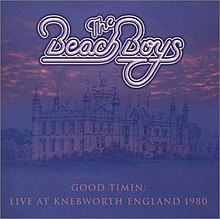
  •  The Beach Boys, Good Timin':  Live at Knebworth England, 1980 (Eagle, issued 2002)
BBKnebworthCover.jpg

The date was June 21, 1980.  This outdoor concert,  recording documents the circumstance of all five original Beach Boys-- the three Wilson brothers, Mike Love, Al Jardine, and Bruce Johnston-- being recorded on stage together for the last time.   There was, of course,  no way for the audience at Knebworth Park to know just how singular was the show they witnessed that night.  The show was fine, but the experience of hearing it now is rather sad.

The concert was not well-attended:  43,000 fans in a 100,000-seat venue.  Acts preceding the Beach Boys included Blues Band, Lindesfarne, Santana, Elkie Brooks, and Mike Oldfield.  The weather, unfortunately, was cold and wet.  Supporting musicians were Ed Carter on guitar, Joe Chemay on bass and backing vocals, Bobby Figueroa on drums, percussion and backing vocals, and Mike Meros on keyboards.

As for the setlist, only three of the songs were from the Beach Boys' current album, Keepin' the Summer Alive, in effect making their show an oldies jukebox.  But they were still a potent live act.

This CD is also available with a DVD documenting the entire concert.

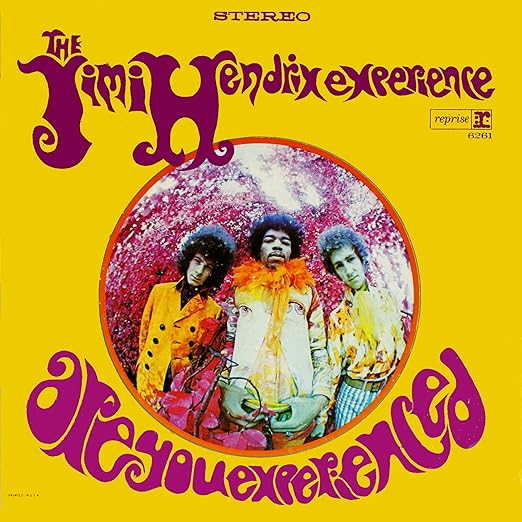
  • The Jimi Hendrix Experience, Are You Experienced? (Reprise, 1967)
Amazon.com: Jimi Hendrix Are You Experienced Album Cover Photo ...

I recently nabbed a used copy of this extraordinary recording, the 2010 Legacy edition including a DVD bonus disc, at the 2nd&Charles store in Highland, Indiana.  It is hard to overstate the impact this record had, and continues to exert, on pop music, with its guitar licks, thundering rhythms, musical electronic feedback, and acid-soaked sensibility on full display.  The individual tracks are of such consistent quality that it's impossible to single out a handful that are particularly outstanding.  Certainly the album is among the very best to come out of the 1960s, an especially fertile decade for music.
 
Lightly and politely
Recorded in Rotterdam on the last night of a European tour in October and November, 1969.  The quintet is "lost" only in the sense that this is the only edition of Miles's band to document these five players-- Miles, with Wayne Shorter, Chick Correa, Dave Holland, and Jack DeJohnnette.  The drummer was really the only change in Davis's band, which frequently included the other four at about the same time.

I took the trouble to compare these concert selections to the original studio versions, on Bitches Brew, The Sorcerer, and the two-LP compilation Directions.  There was obviously a difference between this quintet and aggregations more than twice its size, but more importantly the studio recordings of Miles Davis were in the late sixties largely in the hands of producer Teo Macero:  like rock music before it, jazz performance took a back seat to record production, and it was Macero who organized and spliced together scores of snippets from the band's studio rehearsals.

 
www.jazzviews.net/uploads/1/5/1/1/15113040/publ...


(First of a series of burns provided by BLB)  I like this album a lot, more than most of Dylan's work this late in his career.  Dylan's always been a word man, more than a music man, and he delivers memorable words here.  The crown jewel is the sixteen-minute "Murder Most Foul," reflecting the JFK assassination, the way the world reacted to it, and Bob's own place in it.

"I Contain Multitudes," "Goodbye Jimmy Reed," "Crossing the Rubicon"...  All memorable, all invite another listening.

The tunes are about what you'd expect on a Dylan album, rootsy and bluesy.


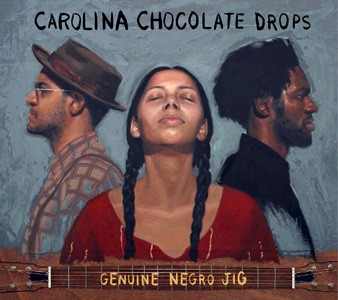
Carolina-chocolate-drops-genuine-negro-jig.jpg
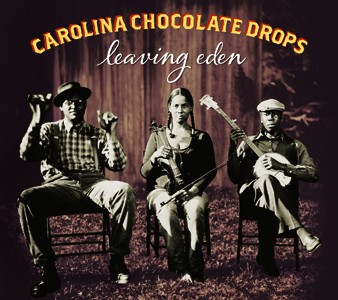
Both discs provide a delightful immersion in bluegrass music.  These musicians, all African American, serve to remind how much of this sort of music, and country music generally, has been a melding of styles all along.  All play multiple instruments and sing stirring vocals.

ZCarolina chocolate drops leaving eden.jpg


  • Thelonious Monk Quartet with John Coltrane, At Carnegie Hall (Blue Note,  1957/ 200? LOC) 
I hadn't listened to this disc, so I'd forgotten how good, how historic it really is.  This is the same quartet who had earlier recorded for Riverside, but the month of working together steadily make these the far superior recordings.


SAD NEWS:  NO MORE CAR CLUB

THE MARCH OF SCIENCE

Yes, its true:  the 2005 Hyundai Elantra has shed its mortal coil.  I bought a used 2019 Accent, only to discover, to my horror, it had no CD player.  Apparently, this has been true for all new cars for quite some time.  The upshot is that I will no longer be driving with 100 discs at my disposal; now I'm trying desperately to receive WDCB, apparently the Chicago area's only jazz radio station.

The music is fine, but my car radio picks it up only intermittently.  There's a classical station whose broadcast often creep over the line to crowd out my jazz.  Even so, I'd like the option of making my own music selections when I choose.

Good thing 'DCB isn't competing with a hip-hop station, of which there are far too many.

NEXT:  Spenser, Part 2